Thursday, April 7, 2016

Rubato – taking time you don’t think you have


„Take time,“ my friend Raj Bhimani said, when I played the Schubert Sonata for him yesterday. He knows the piece well, has performed it himself – in fact, it was that memorable concert when I first fell in love with the composer’s late sonata in A-major.

„Take time when you need it, for places where the music wants to expand, for phrases that take longer to wind down, for places that are technically difficult, for big leaps. Sometimes, the composer doesn’t want us to get there in time.“

Robbing time – this is the literal translation for the musical term rubato. „And don’t make it up,“ my teacher Seymour Bernstein usually adds. He’s been pointing out the same things as Raj, but somehow, I didn’t get the message. And when I recorded the piece today during practice, I realized that, instead of slowing down when the music becomes dramatic I’m speeding up as if I can’t wait to get past the hurdle.

Let’s face it, I’ve been “spinning in the hamster wheel” since the studio recital in early February. Teaching continued, and preparing students for the community recital last Sunday, and registering them for end-of the-year auditions. Those things require some formalities, but also time for thought and coordination. In addition to that I had three lecture recitals coming up in March, that needed to be prepared and practiced. 


Three weeks after the last lecture, this Sunday’s concert is coming up. It wasn’t planned that way, but the concert venue where we had reserved April 25th closed in January, and we were fortunate to get April 10th at All Souls. Life happens…

This is my first public recital in New York City, and I’ve never performed the program before: Schubert’s Sonata in A-major D 959 (playing time about 40 minutes) and, together with Devony Smith and Michael Maliachel, two wonderful soloists from the choir where I sing, Schumann’s song cycle “Myrthen” op 25. That’s 26 songs, mostly short, not too challenging technically, but it’s still a lot of music to get into your mind.

At this point I’m not even thinking of the music I need to learn for choir. MusicaViva’s next concert is coming up on May 1st, and some of the repertoire for the  Sunday services until then is not exactly easy, either.

In times like that, the three hours I reserve for practicing piano every day fly by before I know it. On Monday, I spent most of the day practicing, something like seven hours. It was my first day without appointments in a long time. In between practice sessions I robbed a little time to do other things that didn’t really need to be done.

I made a big pot of soup from the two pounds of carrots I brought home from the community recital the day before. A well-meaning person brought them in for snacks afterwards, but the kids went for the chips and cookies. So would I after a performance, but now thanks to the carrots, I already have lunch for the week.

I called a friend and we had a nice long chat. Towards evening the rain finally stopped. I went for a short walk, and returned refreshed, before going back to the piano for a last practice session in the evening.

There are many things you can do to get some rubato into your every day life, for example:

Bird - Watching (demonstrated by my cat Siddhartha)


Kitty Play-Time with
Siddhartha and Genie Ramses


Decorate your breakfast


Crafts


Activities like these are necessary to avoid getting get crushed, while trying to squeeze more and more into less and less time, and in the end, the breathlessness finds its way into the music as well.
You can also write a blog entry, or, if you live in the  

New York City area, come to our concert on Sunday afternoon.


Rubato -  sich Zeit nehmen, die man eigentlich nicht hat

„Lass Dir Zeit,“ sagte mein Freund Raj Bhimani gestern, nachdem ich ihm die Schubert Sonata vorspielte. Er kennt das Stück gut, hat es selber aufgeführt – in der Tat war es dieses denkwürdige Konzert, dass meine Liebe zu Schuberts später A-Dur Sonate entfachte.

„Nimm Dir Zeit, wenn es nötig ist, für Stellen, wo die Musik sich ausdehnen will, für Phrasen, die langsamer ausklingen wollen, für technisch schwierige Stellen, für grosse Sprünge. Manchmal will der Komponist nicht, dass wir rechtzeitig ankommen.“

„Zeit stehlen“ - das ist die Bedeutung des musikalischen Begriffes rubato. „Und gib sie nicht zurück“ setzt Seymour Bernstein, mein Lehrer, meistens hinzu. Er hat mir ähnliche Dinge gesagt wie Raj gestern, aber irgendwie ist die Botschaft nicht angekommen. Als ich das Stück heute beim Üben aufnahm, bemerkte ich erst richtig wie ich mich immer beeile, wenn die Musik dramatisch wird, als könnte ich es nicht erwarten, das Hindernis hinter mich zu bringen.

Die Sache ist, schon seit dem Konzert meiner Schüler Anfang Februar bin ich „im Hamsterrad.“ Der Unterricht ging nach dem Konzert natürlich weiter. Viele wollten im öffentlichen Stadtkonzert spielen, das letzten Sonntag stattfand, und wieder andere mussten für die Beurteilungsvorspiele zu Ende des Schuljahres angemeldet werden. Das sind Formalitäten, administrative Dinge, die aber auch einiges an Zeit und Überlegung in Anspruch nehmen.

Im März hatte ich drei Vortragskonzerte in der Erwachsenenbildung bei der All Souls Kirche, die Vorbereitung und Proben erforderten. 

Drei Wochen nach der letzten Veranstaltung steht nun das Konzert am kommenden Sonntag an. So war es ursprünglich nicht geplant, aber der Saal, den wir für den 25. April gebucht hatten, machte im Januar zu. Wir hatten Glück, dass bei All Souls noch der 10 April frei war.

Dies ist mein erstes öffentliches Konzert in New York City, und ich habe das Programm noch nie aufgeführt: Schubert’s Sonate in A-major D 959, die ungefähr 40 Minuten dauert, und, zusammen mit Devony Smith und Michael Maliachel, zwei hervorragenden Solisten aus dem Chor wo ich mitsinge, Schumanns Liederzyklus „Myrthen“ op 25. Das sind 26 Lieder, technisch nicht allzu schwierig für das Klavier, aber trotzdem viel Musik, die man in den Kopf, ins Gefühl und in die Finger bekommen muss.

An die Musik, die ich für Musica Vivas nächstes Chorkonzert am 1. Mai lernen muss denke ich im Augenblick lieber gar nicht erst, und das Repertoire für die Sonntagsgottesdienste bis dahin ist auch nicht ohne.

Da fliegen die drei Stunden, die ich täglich fürs Klavierüben freihalte, dahin wie nichts. Am Montag habe ich so ziemlich den ganzen Tag geübt, sieben Stunden oder so. Es war der erste Tag ohne Termine seit langer Zeit. Zwischendurch tat ich einige Dinge, die nicht unbedingt sein mussten.

Ich kochte einen grossen Topf Suppe von den zwei Pfund Möhren, die ich am Vortag vom Stadtkonzert der Schüler mit nach Hause gebracht hatte. Ein wohlmeinender Mensch hatte sie für das „Erfrischungsbuffet“ mitgebracht, aber die Kinder fielen über die Chips und Süssigkeiten her. Würde ich auch so machen nach einem Konzert, aber dank der Möhren habe ich jetzt schon Mittagessen für diese Woche.

Ich verbrachte geraume Zeit am Telefon bei einem gemütlichen Schwatz mit einer Freundin. Gegen Abend hörte der Dauerregen auf, und ich konnte einen kleinen Spaziergang machen, bevor ich ans Klavier zurückging.

Es gibt vieles was man tun kann, um ein bischen rubato in den Alltag zu bringen, z.B: 
Vögel beobachten, hier demonstriert von Kater Siddhartha


Kater-Spielstunde

mit Siddhartha

und Genie Ramses

Das Frühstück dekorieren


Handarbeiten


Solche Dinge sind nötig, damit man nicht atemlos wird bei dem Versuch, immer mehr in immer weniger Zeit hineinzustopfen, so dass am Ende sogar die Musik atemlos wird.

Man kann auch einen Blogeintrag schreiben, oder, wenn man im Grossraum New York wohnt, am Sonntagnachmittag zu unserem Konzert kommen.

Saturday, January 9, 2016

Practicing scales and arpeggios - a note to a student. Tonleitern und Dreiklänge üben - eine Nachricht an eine Schülerin

Your question about the use of practicing scales has been on my mind. You've asked it repeatedly, and I myself was very reluctant to practice them throughout high school and college. I couldn't see the reason for it. I felt they were an imposition of unloved authority figures, and they curbed my freedom of expression. I didn't practice them, and consequently, I wasn't able to play them very well, not fluently, without having to think. 

After I started to study with Seymour Bernstein, he said to me one day: You practice scales and arpeggios, don't you? I was completely surprised to hear that from someone who values expressive playing more than anything else. We had been working together for a while, and I trusted his advice. So, I started to practice scales. It took me forever to play just C-major, 4 octaves, without messing up the fingering. 

Of course you can play pieces without having a secure technical and intellectual understanding of the elements that make up most of the classical repertoire. I did that for many years, and I didn't realize what being in command of scales, chords and arpeggios did for me until I was able to do it. It took a couple of years. 

I continue to play scales and arpeggios every day as a warm up, and it's almost impossible imagine what playing was like before I was able to do this. Ultimately it can't be put into words. It can only be experienced. If you haven't experienced it, you can't really talk about it either, because your arguments are based on ignorance. 

Of course you can say: I'm not a professional, this is not for me.  But that's a little bit like saying: I'm not an athlete, I don't need to tie my shoes. And you fall flat on your face, tripping on a shoestring before you know it. 

Ultimately, it's about improving your playing, and that's not a matter of being professional or not. The question is whether you're curious and persistent enough to trust the experience of many others, and give it a serious try.


Du hast mich schon öfter gefragt, warum man Tonleitern und Arpeggien üben soll. Ich selber habe sie als Schülerin und Studentin meistens boykottiert, weil ich den Sinn nicht einsah. Ich verstand sie als Übungen, die mir von ungeliebten Autoritätspersonen aufgezwungen wurden, und sie schränkten mich ein in meiner Freiheit, mich auszudrücken. Ich übte sie nicht und konnte sie nicht besonders gut spielen, nicht wirklich fliessend und ohne nachzudenken.

Nachdem ich angefangen hatte, Unterricht bei Seymour Berstein zu nehmen, sagte er eines Tages zu mir: Du übst doch Tonleitern und Arpeggien, oder? Ich war sehr überrascht, das von jemandem zu hören dem ausdrucksvolles Spiel über alles geht. Meine bisherige Erfahrung mit ihm ermutigte mich, ihm zu vertrauen. Also fing ich an, Tonleitern zu üben. Es dauerte ewig, bis ich C-Dur, 4 Oktaven, spielen konnte, ohne mich im Fingersatz zu verheddern.

Natürlich kann man Stücke auch ohne sichere Beherrschung und intellektuelles Verständnis der Elemente spielen, aus denen der Grossteil des klassischen Repertoires besteht. Lange Zeit habe ich das getan. Ich habe die Vorzüge der Kenntnis und Beherrschung von Tonleitern, Akkordfolgen und Arpeggien nicht erkannt, weil ich sie nicht spielen konnte. Das zu lernen hat einige Jahre gedauert.

Ich spiele immer noch Tonleitern und Arpeggien zum Aufwärmen zu Beginn des Übens, und kann mir kaum noch vorstellen, wie sich das Spielen vorher anfühlte. Letzten Endes kann man Erfahrung nicht in Worte fassen. Ohne die Erfahrung kann man aber eigentlich nicht argumentieren, weil über etwas redet, das man nicht kennt.

Natürlich kann man sich auf dem Standpunkt stellen, dass so ein professioneller Ansatz für Laien nicht notwendig ist. Aber es ist ein bischen so wie wenn man sagt: Ich bin kein Sportler, ich brauche meine Schnürsenkel nicht zuzubinden. Und dann tritt man drauf, und liegt auf der Nase, bevor man weiss wie einem geschieht.


Letzten Endes geht es um eine Verbesserung des Spiels, und die ist unabhängig vom Status. Die Frage ist, ob man neugierig und ausdauernd genug ist, um der Erfahrung vieler anderer zu vertrauen.

Thursday, November 26, 2015

A Thanksgiving Blessing of the Animals/ Segnung der Tiere zu Thanksgiving


Every year on the Sunday before Thanksgiving the Unitarian Church of All Souls in New York City opens its doors for a blessing of our four legged friends. You can bring a photo of those who are farther away, but all animals who are willing and able are welcome to the ceremony in person.

Jedes Jahr am Sonntag vor Thanksgiving (letzter Donnerstag im November) öffnet die Unitarische Kirche All Souls in New York City ihre Pforten für eine Segnung unserer vierbeinigen Freunde. Die weiter entfernt wohnenden lassen sich gern durch ein Foto vertreten, aber alle Tiere denen es möglich ist, persönlich an der Feier teilzunehmen, sind herzlich willkommen. 


Walking down the aisle…

Treulich geführt...


all the way to the altar.

bis ganz vorne zum Altar.


A special group to be honored are therapy dogs 
(like Casey on the photo) and -cats.
 All therapy animals and their owners 
have to go through a special training program and take a test 
before they are permitted to visit patients 
in hospitals and nursing homes.

Eine Gruppe, die besonders erwähnt wird, sind die Therapiehunde 
(wie Casey auf dem Photo) und -katzen. Alle Tier und ihre Besitzer müssen ein spezielles Trainingsprogramm absolvieren und eine Prüfung machen, bevor sie in Krankenhäusern und Pflegeheimen Patienten besuchen dürfen.


A group of therapy dogs and their human companions 
exchange experience.

Eine Gruppe von Therapiehunden und ihre menschlichen Begleiter beim Erfahrungsaustausch.


My friend Bill Edwards welcomed the congregation. He started the tradition of the Blessing of the Animals at All Souls years ago. He and his wife Margaret have been engaged in animal therapy with their cats for a long time. 
Bill shared an experience from a visit to a veteran's home with one of their cats. He described how a young man who suffered from severe PTSD started to ask question after question, once they put the cat on his lap. The patient's psychologist told Bill later that the young man hadn't spoken a single word up to then.

Mein Freund Bill Edwards hies die versammelten Menschen und Tiere willkommen. Er hat die Tradition der Tiersegnung in der Kirche vor Jahren initiiert. Bill und seine Frau Margaret engagieren sich schon sehr lange mit ihren Katzen in der Tiertherapie.
In seiner Ansprache Bill beschrieb ein Ereignis von einem Besuch in einem Heim für Kriegsversehrte mit einer ihrer Katzen. Ein junger Mann, der nach einem Kriegseinsatz an einem schweren Trauma litt, stellte eine Frage nach der anderen, sobald er die Katze auf dem Schoss hielt. Die Psychologin, die den Patienten betreute, erzählte Bill später er habe noch nie vorher ein Wort gesprochen.


Margaret with "Grey Bear", and Bill with "Dozer" at a presentation they held about cat therapy at the Ethical Culture Society in Maplewood, NJ a few years ago. 

Margaret mit "Grey Bear" und Bill mit "Dozer" bei einem Vortrag über Katzentherapie, den sie vor einigen Jahren bei der Ethical Culture Society in Maplewood hielten.

Bill had planned to bring his cat Angelina to All Souls on Sunday, but he also sings in the choir. There wasn't enough time to return to New Jersey after the services in the morning to get the cat before the blessing in the afternoon. Also, he wasn't sure about Angelina's reaction to trumpets and kettle drums that are a part of of orchestra in Bach's cantata BWV 29 - "We thank thee, o Lord," and would have been a long day in the city for her. My cats Siddhartha and Genie Ramses stayed home for the same reason, but I had a photo of them, and  a few other animals I know


Eigentlich wollte Bill seine Katze Angelina am Sonntag mit in die Kirche bringen. Er ist aber auch Chormitglied, und wir sangen am Sonntag morgen in beiden Gottesdiensten, so dass nicht genug Zeit war, nach New Jersey zurückzufahren und Angelina zu holen. Der Chor und die Gemeinde waren zwar begeistert von Bachs Kantate BWV 29 - "Wir danken dir, Gott," aber Bill war sich nicht sicher, wie die Katze auf Pauken und Trompeten reagieren würde. Auch wäre es ein sehr langer Tag für sie geworden. Aus dem gleichen Grund blieben meine Kater Siddhartha und Genie Ramses zu Hause, aber ich hatte ein Photo von ihnen, und einigen anderen Tieren, die ich kenne.


Siddhartha and Genie Ramses


Teddy and Shadow, my landlord's dogs, waiting in the back yard for milk bones to be served from the kitchen window of my apartment on the second floor.

Teddy und Shadow, die Hunde meines Vermieters, die darauf warten, dass ich Hundekuchen aus dem Küchenfenster meiner Wohnung im 2. Stock serviere.


Lily, who lives in Omaha with my friends Clarinda and Dick

Lily, die bei meinen Freunden Clarinda und Dick in Omaha lebt,


and Senta and Jenny, the dogs of my friends Beate and Karin on the island of Fehmarn in the Baltic Sea

und Senta und Jenny auf der Ostseeinsel Fehmarn, 
die meinen Freundinnen Beate und Karin gehören.


Leporello, a Burmese 

Since I didn't have my own cats to watch over, I had the honor of tending to Leporello, while his mom, my friend Holly, helped with ushering.

Weil ich mich nicht um eigene Katzen kümmern musste, hatte ich die Ehre, Leporello zur Seite zu stehen, während seine Katzenmutter, meine Freundin Holly, bei der Platzanweisung half.


Leporello and Holly

Most participants to the service arrived early for the blessing on Sunday, so they would have enough time for "meets and greets" and settling in.


Die meisten Teilnehmer an der Segnung kamen früh, damit genügend Zeit blieb, sich zu begrüssen und einen guten Platz zu finden.


"I can see everything from here"

"Von hier aus kann ich alles sehen."


"Almost as cozy as my sofa at home"

"Fast so gemütlich wie mein Sofa zu Hause"


There's always time for a treat.

Ein Leckerei ist immer willkommen.


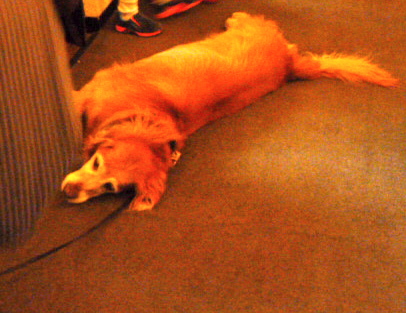
"The sermon is up front, you guys."

"Die Predigt findet vorne statt."


"I find it very relaxing"

"Ich finde sie sehr entspannend."


Two soloists from the choir, Yekaterina Gruzglina, soprano, and Chloe Schaaf, mezzo-soprano, sang Rossini's Duet for Two Cats. Unfortunately I don't have a recording of their performance. 
But if you'd like to get a taste of the extraordinary piece, click on the link below. Soloists in this youtube recording are Elisabeth Schwarzkopf and Victoria de los Angeles, accompanied by Gerald Moore at the piano. 

Zwei Solistinnen aus dem Chor, Yekaterina Gruzglina, Sopran, und Chloe Schaaf, Mezzosopran, sangen Rossinis Duett für zwei Katzen. Leider habe ich keine Aufnahme, aber wenn Ihr Euch dieses aussergewöhnliche Stück anhören möchtet, findet Ihr unter dem youtube link weiter oben eine Aufnahme mit Elisabeth Schwarzkopf und Victoria de los Angeles, begleitet von Gerald Moore am Flügel. 


"We've never heard anything like it."

"So etwas haben wir noch nie gehört."


The congregation also got a chance to made themselves heard.

Auch die Gemeinde bekam eine Chance, sich hören zu lassen.


And then it was time to get up and go to the front for the blessing


Deep peace of the running wave to you

Deep peace of the flowing air to you

Deep peace of the quiet earth to you

Deep peace of the shining stars to you

Deep peace of the infinite peace to you


After all the animals - those present in person and on those on the photos - received this traditional Celtic blessing, the animals and their humans left the church. On our way out we ran into one of the custodians. "Now it's time to get the vacuum cleaner," he said. 

Und dann war es Zeit, aufzustehen und sich zur Segnung nach vorne zu begeben. Nachdem der traditionelle keltische Segensspruch über alle Tiere und alle Photos gesprochen worden ist, begaben sich Tiere und Menschen zum Ausgang. Auf dem Weg begegneten wir einem der Hausmeister: "Ich gehe jetzt den Staubsauger holen," sagte er zu uns.