Showing posts with label Leschetizky Association. Show all posts

Saturday, October 14, 2017

Seymour Bernstein: A Concert of His Piano Works / Seymour Bernstein: Ein Konzert mit seinen Klavierwerken

A special birthday calls for a special kind of celebration. But when Raj Bhimani, who has been Seymour Bernstein’s student for thirty years, asked him what we could do for his 90th birthday, he said he didn’t want a birthday party, or a reception, not even a festive dinner. Raj is a wizard not only at the piano but also in the kitchen. Seymour knew what he was turning down.


One of Raj's culinary creations: the wedding cake for a cousin.

Time gets increasingly precious as you get older. Ninety years of a life rich and fulfilled provide much food for thought, and Seymour insisted on spending April 24th  2017 by himself, immersed in reflection. “I still can’t identify with being ninety, and I’m already past it now,” he told me at my first lesson of the new teaching season two weeks ago. I found him as vigorous, enthusiastic and full of life as he was in October 1997, when I came to his studio for the first time.

The only celebration Seymour did accept was a concert featuring his own compositions for the piano. The event opened this year’s concert series of the Leschetizky Association last Sunday at the TENRI Cultural Institute in New York City. The association connects musicians dedicated to the legacy of the great pianist and teacher Theodor Leschetizky (1830-1915).
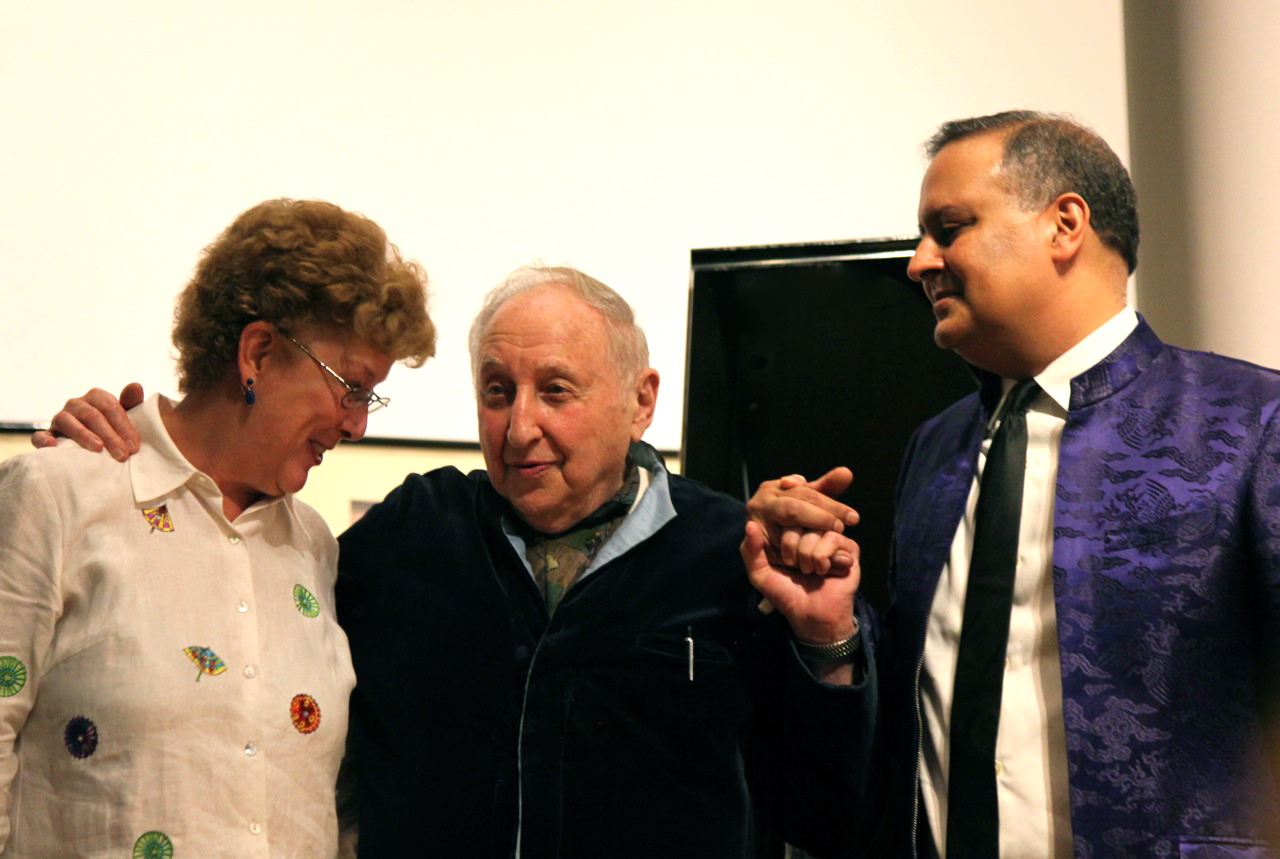

Seymour Bernstein with Alison Thomas und Raj Bhimani, who organized the concert

When Seymour was in his teens, he studied with Clara Husserl, who had studied with Leschetizky in Vienna. Leschetizky had studied with Czerny, and since Czerny studied with Beethoven, we’re all related to him as pianists, as Seymour always says. Raj told the story before the concert began, and as if he had conjured up the spirit, the artistry and beautiful tone that characterize the tradition were palpable in the playing of even the youngest of the thirty-two performers.

The program


Seymour Bernstein’s piano works are music that is written from the heart. They reflect what Seymour values most in music and in performing: the expression of deep feeling. The composer’s face was beaming with pleasure, assuring everybody that the concert was the perfect gift.


Into his old age, he has preserved the wonderment of the child, still capable of being awestruck by seemingly small things, and the miracles of nature. The two “Birds” Suites – impressionistic studies inspired by birds - are among his most popular teaching pieces. Everybody broke out laughing when Seymour told the audience how he was on occasion referred to as “the bird man” or “Seymour Birdseed.”

Seymour has written many pieces for young piano students: Köchel and Sheila, a story suite about the two Siamese Cats he used to have, and story suites about the creatures that keep him company during his summers in Maine: Racoons, and  Belinda, the Chipmunk. 

The concert featured many young performers, who arrived early from all over the city and beyond to rehearse on the piano and get used to the space. That made for a long afternoon, but they all awaited their turn with patience and listened to the other performers attentively, proud to be part of the special event that had taken months to prepare.


Seymour signs scores after the concert

Planning for the concert and the program began in May. It is a challenge for young children to live with repertoire for such a long time. Nicholas, Sophia and Jasper performed the “Out of this World Suite” at our studio recital in June, but it did become a little rusty over summer break. With three weeks to go until the concert after school began in September this was not the time for a slow start.

“They are completely in the music,” I thought when Nicholas coaxed the last note of Whispers from outer Space from the piano, very softly, but with great intensity. Sophia had the Meteorites tumbling head over heels while keeping perfect tempo. The secret to artistry is control, and Spaced Out was never so convincing. Jasper observed the full rest before the last phrase of Reaching for a Star, and the Martians slid down moonbeams with great elegance, even though he forgot the mitten at home that I had him use to protect his fingers during the glissandos.


Nicholas, Sophia und Jasper (at the piano) perform the Out of this World Suite

Every single performer did his and her best during this memorable concert. Some stick out in my memory, like Adam Jackson, who wowed everybody racing The Centipede across the keys just below the speed limit. 
Twenty years ago, Seymour composed Rhapsody on Two Names for the wedding of Lindsay and Javier Clavere.  “We are still married”, Lindsay assured the audience, before she and her husband performed the piece in perfect synchronicity. 
With their stunning rendition of the last movement from Seymour’s Concerto for our Time, Dorothy Grimm and her student Ulysses Squitieri conjured up smiles and chuckles, as people recognized familiar tunes from repertoire that everyone who ever learnt to play the piano has had under their hands. Seymour has woven them skillfully into the piece, and I can picture him at the piano in his studio, having fun while creating the music.

Beaming faces after the concert

All the performers


His humor, his kindness, his generosity and his wisdom reflect in his music. It brought people together who had never met before, and made everybody feel like family. I join Zelma Bodzin, the new president of the Leschetizky Association, in the heartfelt wish she expressed at the beginning of the concert: “Seymour, please continue to have birthdays for many years to come.”

***
Ein besonderer Geburtstag möchte in besonderer Weise gewürdigt werden. Aber als Raj Bhimani, der seit 30 Jahren Seymour Bernstein’s Schüler ist, sich nach seinen Vorstellungen für den 90. Geburtstag erkundigte, wollte er keine Geburtstagsfeier, keinen Empfang, noch nicht einmal ein festliches Abendessen. Raj zaubert nicht nur am Klavier sondern auch in der Küche; Seymour wusste welchen Genuss er da ausschlug.

Eine von Rajs kulinarischen Kreationen: der Hochzeitskuchen für eine Cousine
Je älter man wird, desto kostbarer wird die Zeit. 90 Jahre eines reichen und erfüllten Lebens geben viel Stoff zum Nachdenken. Seymour bestand darauf, den 24. April 2017 reflektierend und alleine zu verbringen. „Ich kann mich immer noch nicht mit meinem Alter identifizieren, obwohl ich ja jetzt schon über 90 bin“, sagte er mir vor 14 Tagen in der ersten Stunde dieses Unterrichtsjahres. Aus seinen Worten sprach die gleiche Energie, Begeisterung und Lebensfreude wie im Oktober 1997, als ich zum ersten Mal den Weg in sein Studio fand.  

Die einzige Feier seines Geburtstages, die er schließlich akzeptierte, war ein Konzert mit seinen eigenen Klavierwerken. Es eröffnete letzten Sonntag die diesjährige Konzertsaison der Leschetizky Gesellschaft im TENRI Kulturinstitut in New York City. In der Gesellschaft finden sich Musiker zusammen, die sich dem pianistischen Erbe des Pianisten und Lehrers Theodor Leschetizky (1830-1915) verpflichtet fühlen.

Seymour Bernstein mit Alison Thomas und Raj Bhimani, die das Konzert organisierten

Als Teenager hatte Seymour Bernstein bei Clara Husserl Klavierunterricht, die bei Leschetizky in Wien studiert hatte. Leschetizky hatte bei Czerny studiert, und weil Czerny bei Beethoven studierte, dürfen wir uns alle als dessen pianistische Nachkommen bezeichnen, wie Seymour immer betont. Raj erzählte die Geschichte bevor das Konzert anfing. Als hätte er den Geist der Tradition beschworen, kennzeichneten Klangschönheit und Ausdrucksstärke die Darbietung aller zweiunddreißig Spieler, sogar der jüngsten.
Das Konzertprogramm


Seymours Klavierwerke sind Musik die von Herzen kommt. Sie sind den Qualitäten gekennzeichnet, die ihm in der Musik und in der Interpretation am wichtigsten sind: Ausdrucksstärke und tiefe Empfindung. Er strahlte vor Freude über das gelungene Geburtstagsgeschenk.


Bis ins hohe Alter hat er sich die Fähigkeit des kindlichen Staunens bewahrt; die Gabe, sich von scheinbar kleinen Dingen anrühren zu lassen, und von den Wundern der Natur. Die beiden Birds Suiten, impressionistische Studien, die verschiedene Vögel charakterisieren, gehören zu seinen beliebtesten Unterrichtswerken.  Alle brachen in Gelächter aus, als er erzählte wie man ihn gelegentlich als den Vogelmann bezeichnet hat, oder auch als Seymour Birdseed. (Vogelfutter)

Seymour hat zahlreiche Werke für junge Klavierschüler geschrieben. Köchel und Sheila ist eine Geschichte mit Musik über die beiden Siamkatzen, die er einmal hatte. Racoons (Waschbären)  und Belinda the Chipmunk (Streifenhörnchen) erzählen von den vierbeinigen Gefährten, in deren Gesellschaft er seine Sommer in Maine verbringt.

Viele dieser Werke wurden von jungen Klavierschülern gespielt, die von überall in der Stadt und in der Umgebung kamen. Sie mussten früh da sein, um das Instrument auszuprobieren und sich an den Raum zu gewöhnen. Das wurde ein langer Nachmittag, aber alle erwarteten ihren Auftritt geduldig und hörten den anderen aufmerksam zu, stolz darauf, bei diesem besonderen Ereignis mitwirken zu können.


Seymour signiert Noten nach dem Konzert

Die Planung für das Konzert und die Zusammenstellung des Programms hatten im Mai begonnen. Es ist nicht einfach für junge Schüler, Repertoire so lange „frisch“ zu halten. Nicholas, Sophia und Jasper führten die „Out of this World“ Suite im Juni im Studiovorspiel auf, aber während der langen Sommerpause wurden die Stücke doch etwas rostig. Als die Schule im September wieder begann, waren noch drei Wochen bis zum Konzert – da hieß es sofort voll durchstarten.

Sie sind gehen ganz in der Musik auf, dachte ich, als Nicholas den letzten Ton von „Whispers from Outer Space“ (Flüstern aus dem All) ganz leise und doch mit grösster Intensität dem Flügel entlockte. Sophia ließ die Meteoriten fröhlich durcheinanderpurzeln, und hielt trotzdem das Tempo. Das Geheimnis von Ausdruckskraft ist Kontrolle, und Spaced Out (Ausgerastet) hat sie noch nie so überzeugend gespielt. Jasper hielt die Pause vor der letzten Phrase von Reaching for a Star erstmalig in voller Länge, und die Marsmenschen rutschten ungehindert die Mondstrahlen herunter, obwohl er den Handschuh zu Hause vergessen hatte, den ich ihm gegeben hatte, um die Finger während der Glissandi zu schützen.

Nicholas, Sophia und Jasper (am Flügel) führen die Out of this World Suite auf

Alle Darbietungen des Programms waren ausgezeichnet. Einige sind mir besonders in Erinnerung geblieben, wie Adam Jackson, der nur knapp unter der Geschwindigkeitsbegrenzung blieb, als er vor begeistertem Publikum den Centipede (Tausendfüssler) über die Tasten jagte.
Rhapsody on Two Names wurde vor 20 Jahren anlässlich der Hochzeit von Lindsay und Javis Clavere komponiert. „Wir sind immer noch verheiratet“, verkündete Lindsay bevor sie das Stück für zwei Klaviere zusammen mit ihrem Mann aufführte.
Dorothy Grimm und ihr Schüler Ulysses Squitieri sorgten mit ihrer gelungenen Darbietung des 3. Satzes aus dem Concerto for our Time für Schmunzeln und leises Lachen unter den Zuhören. Geschickt hat Seymour zahlreiche Themen in dem Stück verarbeitet, die jeder kennt, der einmal Klavier gelernt hat. Ich kann mir vorstellen, wie er zu Hause am Flügel sitzt, und Spass dabei hat, dieses Stück zu komponieren.


Strahlende Gesichter nach dem Konzert

Alle Mitwirkenden 
Sein Humor, seine Güte, seine Grosszügigkeit und Weisheit spiegeln sich in seiner Musik. Sie brachte an diesem Nachmittag viele Menschen zusammen, die sich noch nie getroffen hatten und stiftete das Gefühl einer grossen Familie. Ich schliesse mich dem herzlichen Wunsch von Zelma Bodzin an, der neuen Vorsitzenden der Leschetizky Gesellschaft, die zu Beginn des Konzerts sagte:
“Seymour, ich wünsche mir noch viele Jahre lang Geburtstage von Dir.”

Sunday, October 7, 2012

Tangled up in Transit / Im Verkehrssystem verstrickt


The meeting of the writers' group that I had attended at the public library in Montclair last Wednesday finished at noon, which gave me a little time to stroll around town before heading back to the station to catch my train. Just by chance, I discovered the street where a friend of mine used to live years ago. Sometimes, I stayed with her when I came from New Hampshire for lessons with Seymour Bernstein in New York City. Lost in memories, I strolled through the neighborhood, until a glance at my watch reminded me that it was time to get moving if I didn’t want to miss my train.

I needed to get home to practice.! The adult player’s group of the Leschetizky Association had its first meeting for the following Sunday, and I had signed up to play.

Easily, I found my way back to Bloomfield Avenue, which leads to the station. It wasn’t the route I had taken when I had ventured out from the library, so I wasn’t surprised that the neighborhood looked slightly different from what I remembered from my way there. 

In my mind, I began to reconstruct the Prelude in d-sharp minor from the second book of the Well Tempered Clavier. After some time, I noticed that there were fewer houses, the road went steadily uphill and disappeared into the woods after a sharp turn. One thing I was sure of: From the station to the library the road lead uphill all the way. Now, I was on the way back, from somewhere near the library to the station. The inversion of up is down. A shopper coming out of a supermarket confirmed what I had begun to suspect: in order to get to the station, I needed to walk in the opposite direction. 

The chance to catch my train in Montclair dwindled, but there was a 30 minute layover at Newark Broad Street Station, where I had to change trains. With a little bit of luck, I might be able to catch the train if I took a bus to Broad Street Station, I had done it before. 

At the bus station, the bus driver was taking a break. “I think it’s a number 34 bus,” said a young man who was waiting, when I asked about the bus line, “but you can take any bus from here, they all go to Newark Broad Street.” 

Did I actually ask the bus driver himself whether he was going there? I’m not sure, but I must have, because he said the fare was $ 2.35. After a few blocks down Bloomfield Avenue, the bus took a right and continued on a side street. The last time I took the bus to catch the train in Newark, it was a straight shot down Bloomfield Avenue, about 15, 20 minutes and then there was the station.

We coasted around affluent residential areas for a while, then the neighborhood became more modest, apartment buildings, a retirement home. There is nothing wrong with expanding your knowledge of the area, unless you have an appointment with Bach at the piano at home, and the train that takes you home runs once an hour. 

At a bus stop in front of a NJT office building the bus driver got off, and a different bus driver took over. We continued. A busy street some way ahead looked as if it could be Bloomfield Avenue, but it only lead to the highway. We crossed and moved on. A road sign pointed to the town of East Orange. 

I moved up to the front seat of the bus, right behind the driver, and asked: 
“Can you please tell me where to get off for the Newark Broad Street train station?”
“Newark Broad Street? I’m not going to Newark Broad Street, that’s a different bus.”        
“So where are you going?”
“South Street.” That didn’t tell me anything.
“Are you going by Newark Penn Station by any chance?” I asked. 
I had been there once, on the way from New York to Newark Airport, and if I made it to Newark, I figured there had to be a way to get from one station to the other.
“Yes,” confirmed the bus driver, “ you can get off at Newark Penn Station, and there you can take the bus or the train over to Newark Broad Street.”
“ Can you please tell me when we get to Newark Penn Station?” 
“ A lot of people get off there, you can’t miss it.”

The bus cruised along busy streets that didn’t look very inviting. At last it stopped in an underpass. There was something that could be covered train tracks overhead. The bus driver nodded in my direction, many passengers got off, and so did I. On the sidewalk, I found myself directly in front of a glass door that promised access to tracks 4 and 5. 

I tried the door handle, but the door refused to budge. Access to tracks one and two was only a few steps over, so I tried that one. Same result. How about nine and ten, at the other end? As I applied more energy to the door handle, I the writing on the door caught my eye: “Open from 6 am to 12 pm and from 4 pm to 7 pm.”

It was not 4 pm yet, but eventually, it would be, if I didn’t find the entrance to this darned train station! Where in all the world was the main entrance? 

The fact that trains move on rails guarantees certain predicable routes, and if you follow those rails long enough, you will inevitable come a railroad station - unless the tracks are no longer in service. Step back, take a couple of deep breaths and try to take in the bigger picture.

The train tracks continued along a parking lot across the street, and they seemed to end in a huge rectangular building, only a block away. As I approached, big letters above the entrance came into view: PENNSYLVANIA STATION NEWARK. Hooray!!!

Inside, there was a line at the information booth. The people in front of me had many questions and complex concerns to be taken care of. In my mind’s eye the tail lights of the train I was planning to catch disappeared in the distance. 

My turn came at last. “How do I get to Newark Broad Street Station from here?” 
“Your best bet is the bus no 71, but you can also take the Light Rail. ”
“I’ve had enough of the bus for the day. I think I’ll take the train.” 
“ That would be track two then, and first, you have to get the $ 1.50 ticket.”

There were ticket booths for Amtrack and ticket booths for New Jersey Transit, and ticket machines. As far as I know, Amtrack is long distance, and the shortest lines were in front of the ticket machines. I selected my destination, and the price for the ticket came up: $ 4.00. 

That couldn’t be right. I threw a helpless look in the direction of the information booth, but by now, there was another line. Maybe the bus was the better option. I went back outside, but I couldn’t find the bus stop where I had gotten off. There were other bus stops, people were waiting in line, signs listed different buses, but 71 was not among them. There was a bus to "Ivy Hill," which is a 10 minute walk from where I live, but who knows how many neighborhoods in New Jersey are named "Ivy Hill," and I wasn’t in the mood for more experiments!

I returned to the train station, bought the $ 4.00 train ticket, and rushed up the stairs to track 2. The platform was deserted, except for a gentleman who was texting on his cell phone. 
“Excuse me, “ I interrupted, “ do all trains on this platform go to Newark Broad Street?” 
“ Sorry, I don’t know, I’m waiting for an Amtrack train to Washington DC,” he replied. 

A train arrived on the opposite platform. Destination: New York City. That was not my direction, but at least I knew where I was going, and how to get home from there.  If I was lucky, it would stop in Secaucus - just outside of the city -  where I could catch a train to Newark Broad Street, where I could change to my train to Maplewood. 

I was lucky - which meant that I had to wait for 40 minutes in Secaucus, until I could catch a train to Newark Broad Street, where I had a 30 minute layover until the train to Maplewood arrived. At least I had a good book with me. By the time I got home, I was ready for dinner, and relieved that I have a couple of days left to practice. 

Keep your mind on what you are doing, isn’t that what they say? Focus on practicing while you practice, and on getting home, while you’re trying to get home - maybe there is something to it.
-------------------------
Das Arbeitsgruppe für Leute, die versuchen ein Buch zu schreiben, trifft sich alle 14 Tage mittwochs in der Stadtbücherei in Montclair. Pünktlich um 12 Uhr mittags waren wir fertig, und ich hatte noch ein bischen Zeit, in der Stadt herumzulaufen, bevor ich mich auf den Rückweg zum Bahnhof machen musste. Zufälligerweise fand ich mich auf einmal in einem Viertel wieder, wo eine Freundin von mir vor einigen Jahren wohnte, und manchmal wohnte ich bei ihr, wenn ich aus New Hampshire zum Klavierunterricht bei Seymour Bernstein in New York kam. In Erinnerung versunken streifte ich durch die Gegend, bis mich ein Blick auf die Uhr daran erinnerte, dass ich mich auf den Weg machen musste, wenn ich meinen Zug nicht verpassen wollte.

Ich musste nach Hause zum Üben! Die Vorspielgruppe der Leschetizky Gesellschaft hatte ihr erstes Treffen für den folgenden Sonntag angesetzt, und ich hatte mich zum Spielen angemeldet.

Ohne Schwierigkeiten fand ich den Weg zurück zur Bloomfield Avenue, die zum Bahnhof führt. Es war nicht die gleiche Strecke, die ich auf dem Weg von der Bücherei genommen hatte, von daher fand ich es nicht weiter verwunderlich, dass die Gegend etwas anders aussah.

Im Geiste begann ich, das Präludium in Dis- moll aus dem 2. Teil des Wohltemperierten Klaviers zu rekonstruieren. Nach einiger Zeit fiel mir auf, dass die Bebauung spärlicher wurde, die Strasse führte stetig bergauf und verschwand hinter einer scharfen Kurve im Wald. Eins wusste ich mit Sicherheit: Auf dem Hinweg vom Bahnhof zur Bücherei führt die Strasse stetig bergauf. Nun war ich auf dem Rückweg. Die Umkehrung von bergauf ist bergab. Ein Kunde, der aus dem Supermarkt kam, bestätigte, was mir allmählich klar wurde: Um zum Bahnhof zu gelangen, musste ich mich in die entgegengesetzte Richtung begeben.

Die Chance, den Zug in Montclair noch zu erwischen verringerten sich, aber in Newark Broad Street musste ich umsteigen, und zwischen beiden Zügen war eine halbe Stunde Zeit. Mit etwas Glück konnte ich den Zug nach Hause noch erwischen, wenn ich mit dem Bus nach Newark fuhr; das hatte schonmal geklappt.

An der Bushaltestelle machte der Fahrer gerade Pause. “Ich glaube, das ist der Bus Nr 34,” sagte der juge Mann, den ich nach der Buslinie fragte, “ aber von hier aus können Sie jeden Bus nehmen, sie halten alle in Newark Broad Street.”

Habe ich eigentlich den Fahrer selbst gefragt? Ich glaube schon, denn ich erhielt die Auskunft, dass der Fahrpreis 
$ 2.35 betrug.  Der Bus fuhr die Bloomfield Avenue hinunter, und nach ein paar Strassenecken bog er rechts ab. Das letzte Mal, als ich den Bus nach Newark genommen hatte, ging es immer geradeaus, etwa 15 bis 20 Minuten, und dann kam man direkt zum Bahnhof.

Wir fuhren eine Weile in einer wohlhabenden Wohngegend herum, dann wurde es bescheidener, Mietshäuser, ein Altersheim. Es ist nicht verkehrt, seine Kenntnis der Gegend auszuweiten, es sei denn man hat einen Termin mit Bach zu Hause am Klavier, und der Zug dorthin fährt nur einmal pro Stunde.
  
An einem Bürogebäude der Transitgesellschaft stieg der Busfahrer aus, und ein anderer Fahrer übernahm. Wir fuhren weiter. Eine belebte Strasse in einiger Entfernung hätte die Bloomfield Avenue sein können, entpuppte sich aber als Autobahnzubringer. Wir überquerten sie und fuhren weiter. Ein Strassenschild zeigte nach der Stadt East Orange.

Ich setzte mich auf den vorderen Sitz im Bus direkt hinter dem Fahrer und fragte: 
“ Können Sie mir bitte Bescheid sagen, wo ich aussteigen muss, um zur Bahnstation Newark Broad Street zu kommen?” 
“ Newark Broad Street? Da fahre ich nicht hin, das ist ein anderer Bus.”
“Wo fahren Sie denn hin?”
“ South Street.” Das sagte mir überhaupt nichts.
“ Fahren Sie vielleicht nach Newark Penn Station?” fragte ich. Dort war ich einmal vorbeigekommen, auf dem Weg von New York City zum Flughafen Newark, und wenn ich einmal in Newark war, musste es doch wohl einen Weg von einer Bahnstation zur anderen geben.
“Jawohl,” bestätigte der Fahrer, “ Sie können in Newark Penn Station aussteigen und den Zug oder den Bus nach Broad Street nehmen.” 
“Können Sie mir bitte sagen, wenn wir nach Newark Penn Station kommen?” 
“Da steigen viele Leute aus, Sie können es gar nicht verpassen.”

Der Bus fuhr belebte Strassen entlang, die nicht besonders einladend aussahen. Schliesslich hielt er unter einer Unterführung. Oben über die Strasse führte etwas, das man für überdachte Bahngleise halten konnte. Viele Passagiere stiegen aus, der Busfahrer nickte in meine Richtung, und so schloss ich mich an. 

Auf dem Bürgersteig fand ich mich direkt gegenüber einer Glastür, die Zugang zu Gleis 4 und 5 versprach. Ich bediente den Türgriff, aber die Tür bewegte sich nicht. Nur einige Schritte weiter war die Tür zu Gleis 1 und 2. Ich erhielt das gleiche Resultat. Ich versuchte mein Glück mit Gleis 9 und 10 am anderen Ende. Als ich energischer am Türgriff rüttelte, entdeckte ich eine Aufschrift: “Geöffnet von 6 bis 12 und von 16 - 19 Uhr.” 

Noch war es nicht 16 Uhr, aber das würde schon noch kommen, wenn es mir nicht gelang, den Eingang zu diesem vermalmedeiten Bahnhof zu finden. Wo in aller Welt war der Haupteingang?

Die Tatsache, dass Züge auf Schienen fahren, garantiert festgelegte Strecken, und wenn man den Schienen lange genug folgt, ist es unvermeidlich, dass man schliesslich zu einer Bahnstation kommt, es sei denn die Bahngleise sind stillgelegt. Ein paar Mal tief atmen, ein paar Schritte zurückgehen, versuchen, einen allgemeinen Überblick zu gewinnen. 

Die Gleise führten auf der anderen Strassenseite an einem Parplatz vorbei und schienen an der nächsten Strassenecke in einem grossen rechteckigen Gebäude zu verschwinden. As ich näherkam, erkannte ich grosse Buchstaben über dem Eingang: PENNSYLVANIA STATION NEWARK. Hurra !!!

Am Informationsschalter stand eine Schlange. Die Leute vor mir hatten viele Fragen und komplizierte Sachverhalte zu klären. Im Geiste sah ich die Rücklichter meines Zuges in der Ferne verschwinden. Schliesslich kam ich an die Reihe. 
“Wie komme ich von hier nach Newark Broad Street?” 
“Am besten mit dem Bus, die Linie 71, aber mit dem Zug geht es auch.” 
“Ich habe für heute genug vom Bus, ich denke, ich nehme den Zug.” 
“Der fährt von Gleis 2, und vorher müssen Sie für $ 1.50 eine Fahrkarte kaufen.”

Es gab Fahrkartenschalter der Verkehrsgesellschaft Amtrack und einen der Verkehrsgesellschaft New Jersey Transit, sowie Fahrkartenautomaten. Soweit ich weiss, bedient Amtrack die Fernzüge, und die kürzesten Schlangen standen am Automaten. Ich wählte mein Fahrziel, und der Fahrpreis erschien: $ 4.00

Da stimmte was nicht. Ich warf einen hilflosen Blick in Richtung Informationsschalter, aber da stand schon wieder eine Schlange. Vielleicht war der Bus doch die bessere Lösung. Ich ging wieder nach draussen, aber ich konnte die Haltestelle nicht mehr finden, wo ich ausgestiegen war. Es gab andere Bushaltestellen, Leute standen an, Schilder zeigten verschiedenen Buslinien, aber die 71 war nicht dabei. Es gab einen Bus nach Ivy Hill, das ist 10 Minuten zu Fuss von meiner Wohnung, aber wer weiss wie viele Siedlungen mit dem Namen "Ivy Hill" es in New Jersey gibt, und ich war nicht in Stimmung für weitere Experimente.

Ich ging zurück in den Bahnhof, kaufte die Fahrkarte zu 
$ 4.00 und lief die Stufen hinauf zu Gleis 2. Der Bahnsteig war leer, bis zuf einen Herrn, der eine SMS auf seinem Handy tippte. “Entschuldigen Sie, fahren alle Züge auf diesem Gleis nach Newark Broad Street?” “Tut mir leid, das weiss ich nicht, ich warte auf den Fernzug nach Washington DC.”

Auf dem Gleis gegenüber fuhr ein Nahverkehrszug ein. Ziel: New York City. Das war zwar nicht meine Richtung, aber wenigstens wusste ich, wo’s hinging, und wie ich von dort aus nach Haus kam. Mit etwas Glück würde der Zug kurz vor der Stadt in Secaucus halten, und ich könnte dort einen Zug nach Newark Broad Street erreichen, und dort könnte ich dann in den Zug nach Maplewood umsteigen.  

Ich hatte Glück - was bedeutete, dass ich in Secaucus 40 Minuten warten musste, bis der Zug nach Newark Broad Street kam, und dort hatte ich nochmal 30 Minuten Aufenthalt, bis der Zug nach Maplewood eintraf. Wenigstens hatte ich ein gutes Buch dabei. Als ich zu Hause ankam, war es Zeit zum Abendessen, und ich war froh, dass ich bis Sonntag noch ein paar Tage zum Ueben hatte.

Heisst es nicht, man soll sich auf das konzentrieren, was man gerade tut - beim Heimweg auf den Heimweg, und beim Üben aufs Üben? Vielleicht ist ja doch was dran...