The best entries were chosen for publication in the collection "Inselgeschichten" (Island Stories)
My previous blog post "Imagine"- the personal essay about my first encounter with Manhattan - was the first entry I submitted, and the story "The Happiness of the Island Ants" was my second submission. I am very happy that both were chosen for publication, and would like to thank Beate Forsbach for the inspiration to write them. Both were translated from the original German, and published on this blog with permission from Edition Forsbach.
The book is available for purchase in the original German through the following link "Inselgeschichten"
THE HAPPINESS OF THE ISLAND ANTS
“We’ve got to run, man. It’s about
time we got out of here,” said Wizzy to Busy after another close encounter with
the sweeper at Hamburg Central Station. The machine showed no mercy for
anything that crossed its way.
“Get out of here! Again!” Busy complained.
“You already said that in Valparaiso.”
 |
| Port of Valparaiso |
The two ants had arrived at the
port of Hamburg by ship six months ago. Of course they traveled as stowaways,
because ants aren’t allowed on board officially.
A couple of large metal tanks, a little rusty in several
places, weren’t supposed to be on board, either. A strange liquid seeped
through occasionally. It had a sweet, heavy smell, like syrup, and the taste
was very sweet. It had attracted Wizzy and Busy in the port of Valparaiso, the
home of the ant colony where they grew up. They couldn’t get enough of the
syrup, even though they always felt slightly dizzy afterwards.
They didn’t
care. They simply lay down and slept it off. They never worried about time, or
being late for work. When they woke up again, they simply ingested more of the
sweet stuff. In the end, they decided to camp out right by the tanks, so they
didn’t have to walk so far for their meals.
Wizzy and Busy felt no inclination
for hard work. They were very different from ordinary ants in that respect. It
was the ultimate reason why they ended up leaving the ant colony. They were
constantly at odds with the supervisor, and got fed up with being reprimanded
all the time. There had to be more convenient ways to make a living.
After a particularly sumptuous meal
they fell asleep right on one of the tanks one day. The air was a bit stuffy
when they woke up, but filled with the smell of their favorite food. Wizzy and
Busy didn’t worry too much as long as there was enough to eat. They ate and
slept and ate and slept. The ground was always shaking a little, sometimes
less, sometimes more. In the end, they understood that they were on a ship.
Sometimes they heard noises from
the people who worked on board the ship. One day the door to the storage room
opened. A beam of light penetrated the darkness and focused on the tanks. Tiny
as they were, Wizzy and Busy weren’t afraid of being detected.
“They’ve got to go,” said a voice.
They looked at each other in
surprise.
“They’re not talking about us, are
they?” whispered Busy.
“Don’t worry, they can’t find us,
and if they do, we’ll just disappear in a crack in the floor.”
To be on the safe side, they went
to sleep a little further away from the tanks this time. When they awoke the
tanks were gone. Soon, the door opened again and the storage room was cleaned
thoroughly. They barely escaped, before a strong gush of water swept across the
floor.
Food supplies were scarce for the
remainder of the trip. They fed themselves from the leftovers that went in the
trashcan in the kitchen. The sailors were always hungry and little food was
thrown away. Wizzy and Busy survived on potato peels and longed for the sweet
syrup.
“I wonder what that was,” said
Busy.
“I have no idea,” Wizzy replied,
“but I think it has helped us to understand the language of humans. At least
we’ll be able to find out what’s up.”
In the port of Hamburg, they landed
on a garbage truck, together with the contents of the trashcan. The truck drove
through the city, collecting trash. The two ants climbed the tailgate, so they
could see where they were going. Following some spontaneous intuition they get
off at the Main Railroad Station.
 |
| Hamburg Central Station |
It proved to be a good choice. They
set up their headquarters by a bakery. When they weren’t in the mood for sweets
there were plenty of other choices. Over time, they made a map of the different
cafes, restaurants and food stands. You didn’t even have to walk. You could
always hitch a ride on a luggage cart or a suitcase. Getting on and off at the
right moment was the only thing that required a little practice.
They didn’t bother to make the
acquaintance of the local ants. Watching people and listening to their stories
was a much more interesting pastime. The hustle and bustle during rush hour
always reminded them of their ant colony back in Valparaiso, but they never got
homesick. From their safe outlook on the roof of the bakery they observed the
mayhem and wondered why everybody was in such a hurry. Observing was fun,
though, as long as they weren’t in the middle of it and in danger of being run
over.
Food, sleep and entertainment
seemed guaranteed, until the administration decided to intensify efforts for
cleanliness and hygiene on the premises. That resolution was followed by the
ants’ first encounter with the sweeper. At least it made a lot of noise, so
that they had a chance to get away in time. The chemicals applied by pest
control were more treacherous. They came silently, during the night, when
everything was quiet. One squirt was enough to extinguish the entire ant
population by the big trashcan in the main hall.
“That’s no fun any more,” said
Busy. “We haven’t had a proper night’s sleep for an entire week.”
“I wonder whether it’s going to
continue like this, or whether it’s only a PHASE that will wind down after a
while.” He proudly emphasized the word “phase.” He had just picked it up from a
conversation between two gentlemen in business suits, and he had the feeling it
suited the situation.
“Phase or no phase, if we’re
squished before it’s over the ability to name the PHENOMENON will be useless to
us,” said Busy. Like Wizzy, he was eager to extend his vocabulary. Both ants
realized that mental effort suited them much better than physical work.
“Where to go, that’s the question,”
said Busy. The sound of the approaching sweeper made them panic and sent them
running down the stairs to platform 3 without cover. They found shelter under a
bench, close to the trash can.
 |
| Hamburg Central Station |
“Vacation, finally, Thank heavens,”
said the voice of a woman. “I’m ready for the island.” The woman looked tired,
but there was a tinge of relief in her voice, and she was beaming when she said
the word “island.”
“Island, what’s that?” asked Busy.
“I have no idea,” replied Wizzy.
“Why don’t we go and find out.” He was chewing on a crumb that had come off a
roll and fallen on the floor.
“Yuk, traces of mustard,” he
complained, making a face. “I can’t stand it, why don’t they serve hot dogs
with jam.”
“Wrong place, my friend,” said
Busy, “let’s go and find a bakery.”
“I wonder whether they have one on
the island,” said Wizzy. “Let’s go and investigate.”
Shortly afterwards the train to
Puttgarden arrived at the platform. Quickly, the two ants crawled into the bag
that was standing on the floor next to the woman’s luggage. It was a good
choice. The bag contained the food for the trip, so Wizzy and Busy were
traveling in the first class dining car, so to say. Immediately, Wizzy got to
work on the wrapper of a cereal bar, eager to neutralize the taste of mustard.
Busy hid behind an apple that lay on top and followed the conversation of the
travelers.
“Three weeks on the island,” the
woman said to her travel companion, “we don’t have to go anywhere where we
don’t want to be, no rush; we’ll sleep in every morning, eat well, sit on the beach
and look at the ocean. It’s going to be pure heaven.”
 |
| Beach on the island of Fehmarn |
“Sounds good,” said Busy to Wizzy,
who was at the bottom of the bag. “Are you almost through?”
“Just a sec, yes, I’m though. Hmm,
delicious, very similar taste the syrup we had on the ship. Why don’t you join
me and get some as well.”
Busy started to crawl towards the
bottom, not a minute too early, for the woman had just reached for the apple. Fortunately the travelers weren’t very hungry,
so they reached Puttgarden without further unsettling incidents.
“Everybody get off the train who doesn’t want to go on board the ship,” said the conductor. The ants had no inclination to board another ship. Who knew, they might end up back in Valparaiso, with their former ant colony.
They were lucky. The bag started to
move. The two travelers were getting off the train.
“I suggest we stay where we are and
see what happens,” said Wizzy. The two travelers hailed a cab that took them to
their holiday flat. They put down their luggage and left. The front door fell
shut and all was quiet.
Wizzy and Busy disembarked from the
bag and looked around.
“Smells good here,” said Wizzy.
“You’re right,” Busy confirmed,
“but the smell is coming from outside.
“Let’s go and find out where it
comes from,” said Wizzy.
There was a crack between the front
door and the floor. They crawled through and out into the hallway. They
followed the wall, descended the stairs and found themselves in another
hallway, in front of a glass door. Busy inspected the bottom. “Tight,” he
stated.
“Just wait, I’ll figure it out,”
said Wizzy. He began to crawl up the
glass, until he reached the inscription on top that said “Sunshine Café and
Bakery.” Wizzy traced the signs.
“We’re in the right place,” he said
after joining Busy down on the floor again. “All we need to do is find a way to
get in.”
They began to run down the hallway
until they came to a door that was leaning open. The scent that attracted them
upstairs became more intense. They had reached the bakery.
They had never seen anything like
it. Pound cakes, and fancy cakes glazed with different icings, chocolate and
vanilla. Busy discovered his love for butter cream, while Wizzy indulged in
roasted almonds.
“I haven’t eaten this well since
the crossing,” he exclaimed. “You can say that,” Busy agreed, “and once you’ve
digested the roasted almonds you must try the chocolate butter cream.”
“This is paradise,” they both said
in unison.
“Just don’t get caught,” said a
thin, frightened voice. It came out of nowhere and didn’t sound human. They
looked around in surprise. A small black ant was sitting on the floor under the
table.
“And who are you?” asked Wizzy, and
Busy added: ”Do you live here?”
“I’m Clarinda, from the ant colony
by the bakery,” said the ant.
“There are a lot of good things
here, but life is dangerous. Our Queen just perished. She loved almond
crescents, just like you, but then she became too daring, and they just brushed
her off the table and squished her on the floor. I can still hear the crunch,
when the baker’s heavy shoe came down and crushed her.”
Clarinda sniffled, and wiped away a
tear. “We’ve been without a leader ever since, and we have no idea what to do.
We barely dare enter the bakery. Who are you? I’ve never seen you before.
You’re not from here, are you?”
Wizzy and Busy introduced
themselves and presented a short account of their adventures.
“Follow me, I’ll take you to meet
the others,” said Clarinda. Wizzy and Busy looked at each other. They weren’t
too thrilled about joining another ant colony. In spite of the dangers they had
become accustomed to human language and thinking, and felt more comfortable
with it than with their fellow ants.
Finally, Wizzy said: “Listen, Busy,
let’s take a look at the situation. We’ve crossed the ocean, and we have lived
at Hamburg Central Station. We’ve risked our lives more than once, and we’ve
survived. “
“You’re right,” Busy conceded.
“They don’t know what to do without their queen anyway. We’ll get out of there
if we don’t like it.”
“Who knows, maybe we can even be of
use,” said Busy.

They followed Clarinda to the
anthill in a remote corner of the yard. Wizzy and Busy could barely squeeze
through the entrance. They had grown in body as well as spirit since their
departure from Valparaiso.
The island ants had been living in
their anthill for generations. The bakery provided a steady supply of
delicacies, but salvaging them you risked your life every time.
“It’s absurd, really,” said Wizzy.
“There is more than enough sugar and chocolate for all of us. We don’t need
that much, we’re quite modest, actually.”
They decided to stay and observe
the situation. The island ants were very hospitable, and grateful that someone
paid attention to their story. They had never heard of anyone travelling the
world. They didn’t even know that there was a world on the other side of the
ocean that surrounded theirs.
Wizzy and Busy spent the following
day in the bakery, well hidden, and escorted by local ants. Following Wizzy’s
suggestion, sentries were put up between the anthill and the bakery, ready to
report any danger that might appear. In spite of that, Wizzy and Busy exercised
great caution, watching from their outlook on the edge of the air vent under
the ceiling. They were able to observe the entire bakery.
They noticed that things kept
falling on the floor; flour, sugar, a roasted almond rolled from the table
every now and then. On these occasions, Busy had a hard time keeping Wizzy from
making a dash for his favorite sweet. From time to time the floor would be
swept, and all the goodies were thrown in the trash.
“What a waste,” Busy said, sounding
annoyed.
Shortly after lunch break the
apprentice spilled a ten-pound bag of sugar. “What a mess,” yelled the baker,
“get a broom and sweep it up on the double!” The boy’s shoes made crunching
sounds as he went to fetch it from the cabinet where cleaning supplies were
stored, and Busy couldn’t help thinking of the poor queen of the ants.
In the evening, Wizzy and Busy sat
quietly in the dark yard by the anthill, lost in thought.
“I’ve got an idea, “ Wizzy said
suddenly.
“Let’s hear it,” demanded Busy.
“It’s very simple,” said Wizzy,
“all you need is a cleaning crew.”
“You’re nuts,” objected Busy, ”I
thought you weren’t crazy about working any more. Me neither, by the way.”
“That hasn’t changed,” Wizzy explained. “The
others can work, actually, they like to do that. We organize, negotiate, and
make the connections to the humans.”
They proposed the following
contract between the ants and the bakery to a committee of selected ants:
§1 We, the Island Ants from the big anthill in the back yard of
the Sunshine Bakery, commit to quickly and thoroughly removing any spills in
the bakery at regular intervals.
§2 Special forces can be provided promptly in case of major mishaps.
§3 We guarantee that clean supplies and reserves will be left
uncontaminated.
§4 In return, the humans guarantee the ants free access to the bakery,
and provide for their safety and protection
The members of the
committee looked at each other with bewilderment. “Not a bad idea,” they
decided at last, “but cooperate with humans? They reach for a fly swatter the
moment they catch sight of one of us. And how are you going to explain the plan
to them in the first place?”
“Just wait and
see,” said Wizzy. “ Trust me, I’ve figured it all out. To begin with, I need a
couple of you to do some work.”
To himself, he
mumbled:
“And then I’ll need
a couple of courageous ants, but that’s for later.”
I wonder what he’s up to, thought Buzy.
Even he didn’t know
that Wizzy hadn’t only filled his tummy during those long hours at Hamburg
Central Station; he had also learnt to read on the side.
The tanks that were submerged in the
ocean during the crossing contained the leftovers of a failed attempt to
produce a particularly potent insecticide. Scientists observed during the first
stage of the experiment that the insects were left unharmed on contact with the
concoction. In the time that followed, the insects exhibited signs of
extraordinary intelligence.
In the course of the night the ants
laid traces in the sand of the parking lot behind the bakery. When morning
came, Wizzy said:
“Now I need a couple of courageous
ants who run along the traces so people can see them in the sand.”
Wizzy and Busy made the start.
Hesitant at first, then more and more determined, the other ants joined them,
so that the trances became clearly visible in the light sand.
“That way, we’ll at least perish together,”
sighed Clarinda, who was the last to join the crowd.

At the same time, Professor Dr Crawl
and his wife were waiting for their breakfast in the café. They live in
Hamburg, and spend every summer on the island of Fehmarn. Dr Crawl tells
everyone how much he enjoys his annual vacation, and how the fresh air and the calm
help him refuel from the demands and challenges of his research. This must be
true; Dr Crawl is one of the most successful scientists at Hamburg University.
“It’s so quiet here,” said Mrs Crawl
at last. “I wonder if they’ve forgotten about us. That’s never happened
before.”
“Something must be wrong,” her
husband agreed at last. “Let’s go and check this out.”
They took a glance
at the bakery and the shop.“There’s no one here,” he said. “I wonder where
everybody went.”
Suddenly, his wife
cried: “Look the back door is open.”
They went outside,
and joined the small group of people who had gathered in the parking lot and
watched the ants in amazement.
“Stop, hold it,
don’t touch,” exclaimed Prof Crawl, when he saw the unique formation of ants.
“Mathilde, go get the camera.” Then he murmured: “This is phenomenal,
absolutely astonishing, unheard of! A once-in-a-lifetime opportunity to gain
revolutionary insights regarding the intelligence of formicidae (ants)”
Wizzy realized that
his chance had come. He crawled onto a piece of paper that the ants had
salvaged from the waste basked during the night. Supported by Busy, who had
previously been instructed, both ants began to outline figures on the paper.
“I hope he gets it soon,” Buzzy said
to Wizzy, “you’re asking a lot on an empty stomach.
“Shut up, keep going,” replied
Wizzy, whose knees were trembling.
“Good
heavens, they’re writing,” exclaimed Prof. Crawl, who was watching them
intently. “A pen, please, doesn’t anybody have a pen?”
The sales assistant ran to the shop and returned with a pen.
With diligence and caution, the professor traced the ants’ ways with the pen.
The baker and his wife shook their heads in disbelief, as the contract appeared
on the page, one letter at a time.
“Paper, white, please,” requested
Dr Crawl, as the trash paper was filling up.
The
baker, who realized that he was no longer in control of the situation, ran to
the office.
“This is sensational,” said Dr
Crawl, when he finally got up and brushed the sand off his pants. “You have to
accept, man. You have no choice, this is a scientific experiment of the highest
priority.”
“PRIORITY,” said Wizzy to Busy
“here’s another term for the dictionary. Remember that, and starting tomorrow,
I’ll teach you to write.”
Busy wasn’t sure what to think of
that, but as long as he was able to fill his tummy without considerable
physical effort, anything was fine with him.
And so it happened. The contract
was approved and signed. The professor’s institute at the university sponsored
the project and undertook the evaluation. In order to avoid complaints by
tourists who have objections against insects in general, and ants in particular,
it was agreed to keep the experiment confidential for the time being.
First results are promising. Ants
and humans coexist peacefully and work hand in hand. The employees enjoy
leaving the bakery for a five-minute coffee-break at the expense of Hamburg
University once an hour, while the ants take care of the clean up. Soon, more
ants had to be hired, and a large population lives off the spills from the
bakery these days.
Wizzy became king of the ants, but
he is not very interested in ruling over his subjects. He prefers to develop new schemes of
organization in cooperation with Professor Crawl. Busy is Wizzy’s substitute,
and supervises their practical implementation.
And in this way, a grand experiment
started on a small island. Who knows, it may find followers all over the world
eventually.
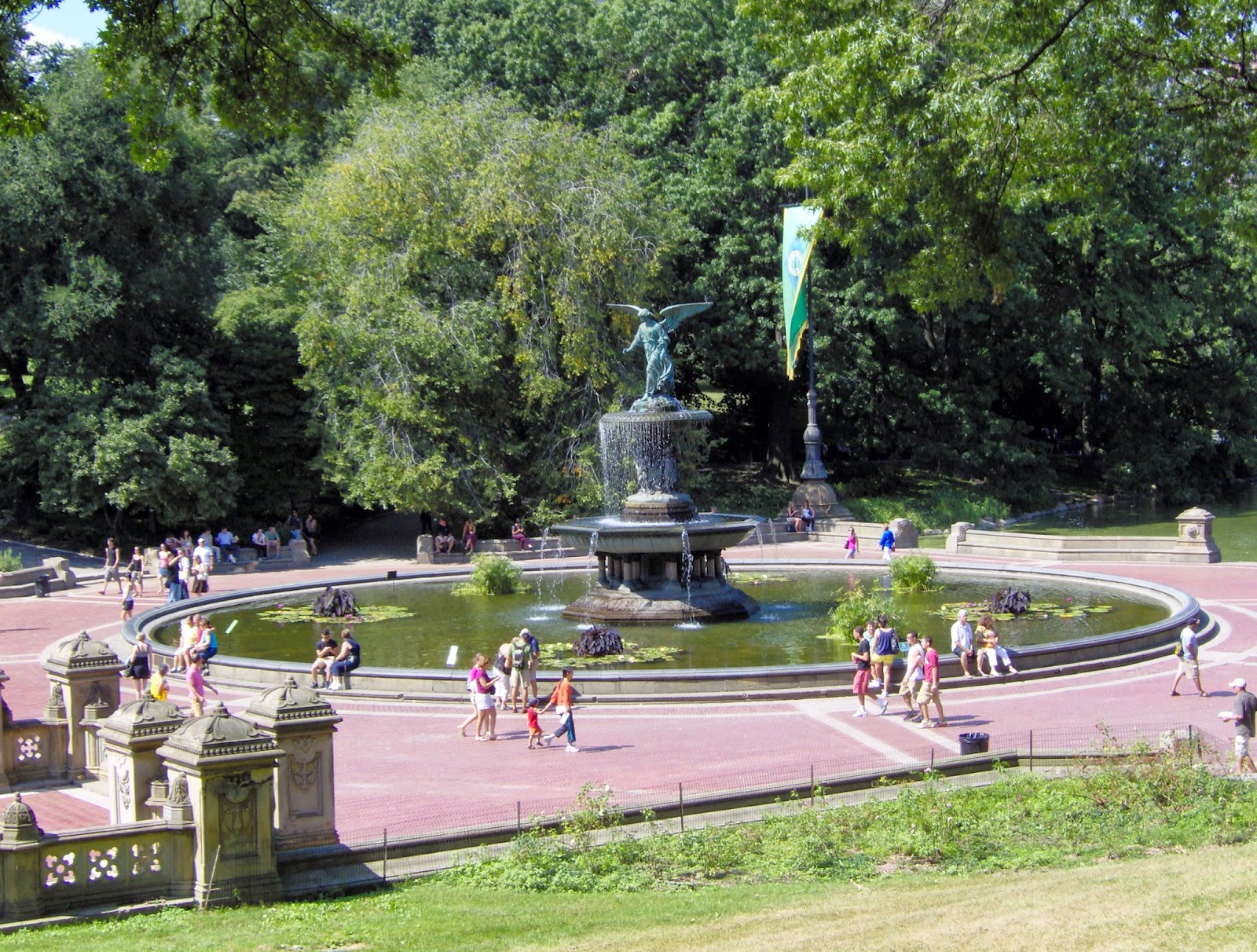
Written in Central Park, at my
favorite place by the lake, on the island of Manhattan, August 5, 2013