Showing posts with label Make Music New York. Show all posts

Sunday, August 8, 2021

Lucky- Penny Story / Glückspfennig-Geschichte

It’s the morning of an ordinary workday. Plenty of things lie ahead that I don’t like to do, but I’ve been putting them off long enough to get proof that they won’t get done by themselves. In order to brace myself, I go out for a walk. Exercise, fresh air and touching base with the neighborhood always holds the possibility of unexpected perks that may lift the mood. 

Towards the end of my round it happens. The sunlight hits a sparkling object on the pavement: my lucky penny for the day! I pick it up and put it in my pocket, ready to head home and tackle the tasks.  


There must be some magic at work that draws my gaze to the spot on the ground where someone else dropped a coin, though over the years, I have developed a hunch for promising hunting grounds. Parking lots by a supermarket or drugstore are a good address; places with a high turn-over like the Seven-Eleven a block down from my street. People don’t pay much attention to things falling out of their pockets when they’re in a hurry to pick up a snack or a coffee. 


Lucky pennies


Certain ethical considerations arise: is it ok to take a penny you find inside a store, or does that belong to the staff? Taking what’s not yours creates bad karma, but a donation into the tip jar at the cashier’s has appeased the gods so far. The bus driver doesn’t have a tip jar, but chances are the cleaning crew will sweep out whatever is on the floor at the end of the day. I can’t take responsibility for lucky pennies going to waste, so - unless another passenger gets ahead of me - I do pick up lucky pennies on the bus.


Talking about busses: years ago, back in Germany, I almost got into an accident picking up a lucky penny. I was going pretty fast on my bike on a busy road when I spotted one on the ground at the bus stop. The instant I hit the brakes I heard loud, aggressive honking - focussed on the penny ahead I’d failed to notice the bus behind me. It must have been the lucky penny that kept me from getting run over.


Do some pennies bring more luck than others? Does it run out over time? I usually keep them in my pocket until the end of the day or until they can be exchanged for new ones. At that point, the previous harvest goes into a special “lucky-penny-piggy-bank.” Once it is full, I take the coins to the bank and the value has to used for a meaningful purpose so that good luck is returned to circulation. 

Lucky Penny Piggy Banks


My last collection of German “Pfennige” went into the purchase of a pair of solid winter shoes on December 27, 2001. The following day I would leave my native country for New Hampshire. It seemed appropriate to take the first steps on unknown, frozen ground in shoes from the place that had provided the foundation for adventures that lay ahead. 


Winter in New Hampshire


My first collection of lucky pennies in the US paid the fee for Siddhartha and Genie Ramses, the two fabulous cats I had just adopted from Homeward Bound in the Heartland, an animal rescue organization. 


Siddhartha (r) und Genie Ramses (l)


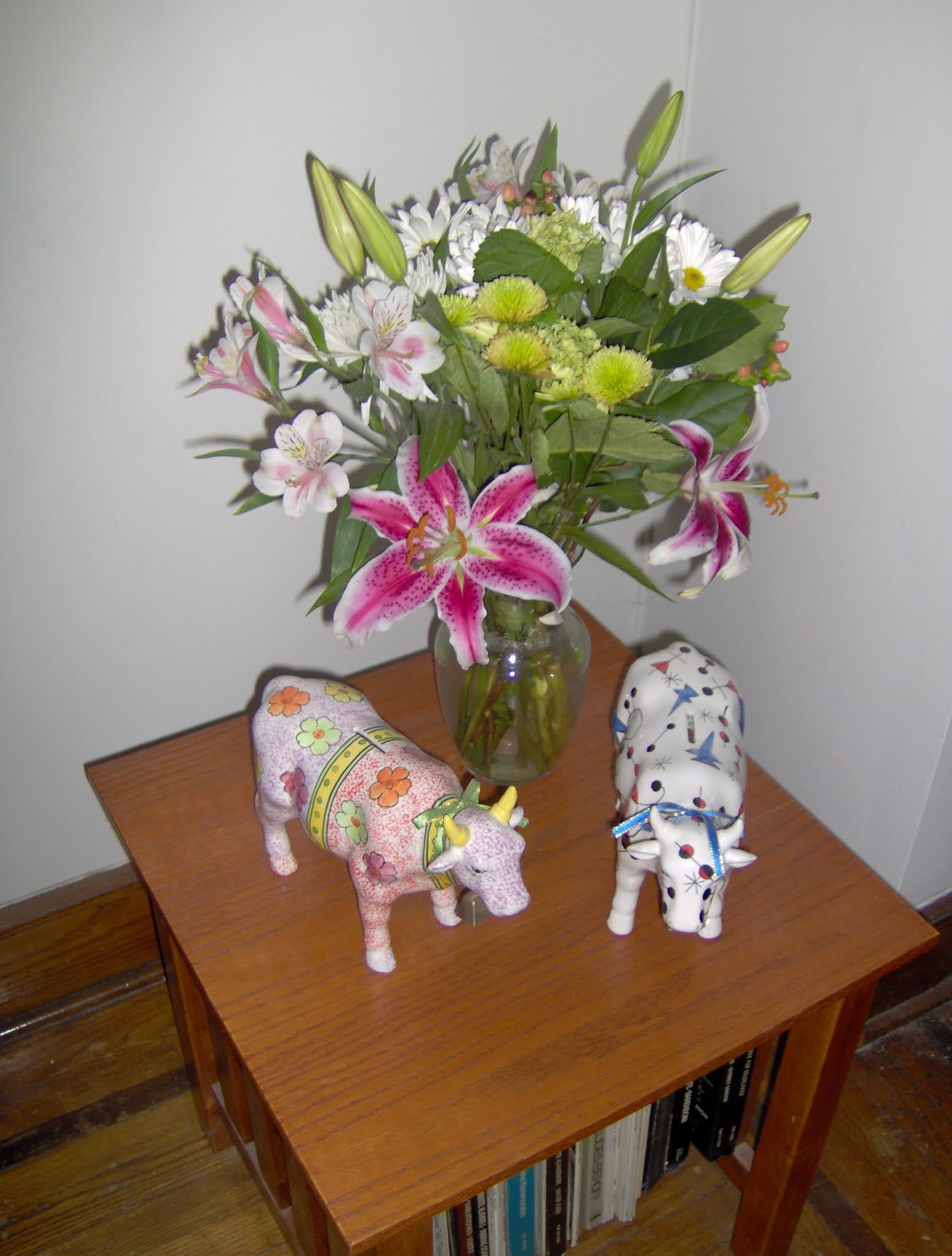
Nine years later, I don’t have a cause in mind, but my two “Lucky-Penny-Cows” refuse to swallow another coin. It takes considerable time to to relieve them of their contents.  Prying out about $20 worth of bills, I realize that it’s better to store them separately. I must have had that idea before, because I also find a handwritten and dated note: $ 50 found at Lincoln Center., NYC 


The two bags full of coins that I log into the city weigh a ton. I’ve called the bank to make sure they’re open on Sundays, and their coin-counting machine is up and running. Due to construction, the subway skips the stop where I need to get off. This gives me the chance to schepp the lucky harvest a little longer, while searching my mind for meantingful projects that can use a donation. 


Penny Arcade


The bills find their way into the guitar case of two street musicians. The proceeds from the coins (2444 pennies, 96 5c coins, 265 dimes, 79 quarters, 1 dollar) go to International House , my “home” in NYC while studying piano with Seymour Bernstein in the winter of 1999/2000. The $ 50  that I found at Lincoln Center support “Make Music New York,” the festival that fills the city’s streets with music at the beginning of summer and winter - may it continue for years to come.


Receipt of the coin collection


------

Glückspfennig-Geschichte


Es ist ein ganz normaler Morgen an einem Werktag. Ich habe eine Reihe von Dingen au tun, zu denen ich keine Lust habe, aber ich habe sie bereits lange genug vor mir her geschoben um zu beweisen, dass sie sich nicht von selbst erledigen. Zur inneren Stärkung gehe ich erstmal spazieren. Bewegung, frische Luft und ein Rundgang durch die Nachbarschaft eröffnen immerhin die Möglichkeit unerwarteter Begegnungen und Entdeckungen, die die Stimmung heben.


Gegen Ende meines Spaziergangs passiert es: vor mir auf dem Boden glitzert eine Münze in der Sonne; mein Glückspfennig für den Tag. Ich hebe ihn auf, stecke ihn in die Tasche. Jetzt fühle ich mich fit um ungeliebte Aufgaben in Angriff zu nehmen.


Eine geheimnisvolle Energie muss am Werk sein, die meinen Blick immer da zu Boden lenkt, wo jemand eine Münze fallengelassen hat. Allerdings habe ich im Lauf der Jahre ein Gefühl für vielversprechende Jagdreviere entwickelt. Parkplätze bei Supermärkten sind eine gute Adresse, Orte mit viel Publikumsverkehr wie der Seven-Eleven Laden in der Nähe meiner Wohnung, der die Umgebung 24 Stunden rund um die Uhr mit Getränken und Snacks versorgt. Wenn die Zeit knapp, der Hunger gross und der Koffeinspiegel niedrig ist, ist für Gegenstände, die zufällig aus der Hosentasche oder aus dem Portemonnaie fallen, nicht mehr viel Aufmerksamkeit übrig.


Gefundenes Glück


Gewisse ethische Gesichtspunkte verdienen Beachtung. Ist es in Ordnung, einen Pfennig einzustecken, den man im Geschäft findet, oder handelt es sich da um Eigentum des Personals? Etwas zu nehmen was einem nicht gehört erzeugt schlechtes Karma, aber eine Spende in den Trinkgeld-Becher an der Kasse hat bisher die Götter beschwichtigt. 


Im Bus gibt es kein Gefäss für Trinkgeld, aber die Wahrscheinlichkeit ist gross, dass Gückspfennige am Ende des Tages weggefegt werden und auf dem Müll landen, mit allem anderen was auf dem Boden liegt. Eine solche Verschwendung kann ich nicht verantworten, und aus diesem Grund hebe ich Glückspfennige auf, die ich im Bus finde - es sei denn, ein anderer Passagier kommt mir zuvor.


Von wegen Busse: Vor Jahren, als ich noch in Köln lebte, hat mich die Rettung eines Glückspfennigs mal um ein Haar in einen Unfall verwickelt. Ich fuhr auf einer belebten Strasse ziemlich schnell mit dem Fahrrad, als ich an einer Bushaltestelle einen Pfennig auf dem Pflaster blinken sah. Mein sofortiges Bremsmanöver resultierte in einem wütendem Hupkonzert. Den Pfennig vor mir hatte ich gesehen, den Bus hinter mir nicht. Vielleicht war es ja der Pfennig, der ihn noch rechtzeitig gestoppt hat. 


Bringen manche Pfennige mehr Glück als andere? Ist das Glück, das sie bringen, unbegrenzt haltbar? Ich lasse sie normalerweise so lange in der Tasche bis ich Nachschub finde. Die alten sammle ich in einer speziellen Sparbüchse. Wenn sie voll ist, bringe ich die Münzen zur Bank und der Gegenwert wird in einer sinnvollen Verwendung zugeführt, damit das Glück wieder in Umlauf kommt. 


Glückspfennig-Sparkühe


Für meine letzte deutsche Glückspfennigsammlung erstand ich am 27.12.2001, dem Tag vor meiner Umsiedlung in die USA, ein paar solide Winterschuhe. Den ungewohnt harten Winter in New Hampshire mit Schuhen aus der Heimat zu bewältigen gab mir das Gefühl einer soliden Grundlage.


Winter in New Hampshire


Mit der ersten Sammlung amerikanischer Glückspfennige bezahlte ich die Adoptionsgebühr bei Homeward Bound in the Heartland , der Tierschutzorganisation, der ich  meine beiden fabelhaften Kater verdanke.


Siddhartha (r) und Genie Ramses (l)

Neun Jahre später habe ich keinen Verwendungszweck im Kopf, aber die beiden “Glückspfennigkühe” sind bis zum Platzen gefüllt. Es dauert eine ganze Weile, den Inhalt herauszupuhlen. Münzen und $ 20 in Scheinen haben sich ineinander verhakt, die Scheine hebt man besser separat auf. Die Idee muss mir schonmal gekommen sein, denn ich finde auch einen handgeschriebenen, datierten Zettel: $ 50 gefunden, am Lincoln Center in New York. 


Mit zwei bleischweren Taschen voller Münzen mache ich mich auf den Weg in die Stadt. Die Bank ist sonntags geöffnet, ein Münzzählautomat vorhanden und funktionstüchtig - das hat man mir jedenfalls am Telefon versichert. Wegen Gleisbauarbeiten fährt die U-Bahn an der Haltestelle durch, wo ich aussteigen muss. So kann ich mein Glück noch ein bisschen länger mit mir herumtragen, während ich nach Ideen für Verwendungszwecke suche. 


Münzzählmaschine

Die Dollarscheine landen im Gitarrenkasten zweier Strassenmusikanten. Der Erlös der Münzsammlung (2444 1-cent, 96 5-cent, 265  10- cent, 79  25 cent- Münzen,1 Dollar) geht an International House, das Studentenwohnheim, wo ich während meines Klavierstudiums bei Seymour Bernstein im Winter 1999/2000 ein Zuhause fand. Die 

$ 50, die am Lincoln Center auf der Strasse lagen, überweise ich an Make Music New York, das Musikfestival, das jedes Jahr zum Sommer- und zum Winteranfang die Strassen der Stadt mit Musik füllt - auf dass es noch viele Jahre so weitergeht.


Quittung für die Münzen

Monday, June 25, 2012

K'un - the performance/ K'un - die Auffuehrung

Setting out for the performance
Aufbruch zur Auffuehrung
Last Thursday morning temperatures were well into the 90's. We had orders to pick up our pianos at a place about 6 blocks away from the performance space, so I revived my luggage cart.


Letzten Donnerstag morgen war es ueber 30 Grad. Wir hatten Anweisung, unsere Klaviere an einem Sammelplatz selber abzuholen und zum etwa 6 Blocks entfernten Auffuehrungsort zu bringen. Da wurde mein alter Gepaecktransporter noch einmal reaktiviert.


Piano assembly
Klavierversammlung

Talk about being overprepared. After waiting in front of the meeting place for 10 minutes, I found out that the pianos had been transported already.


Nachdem ich 10 Minuten am Treffpunkt gewartet hatte, fand ich heraus, dass die Instrumente schon transportiert worden waren.

Performers' Assembly
Pianistenversammlung

Setting up
Aufbauen 
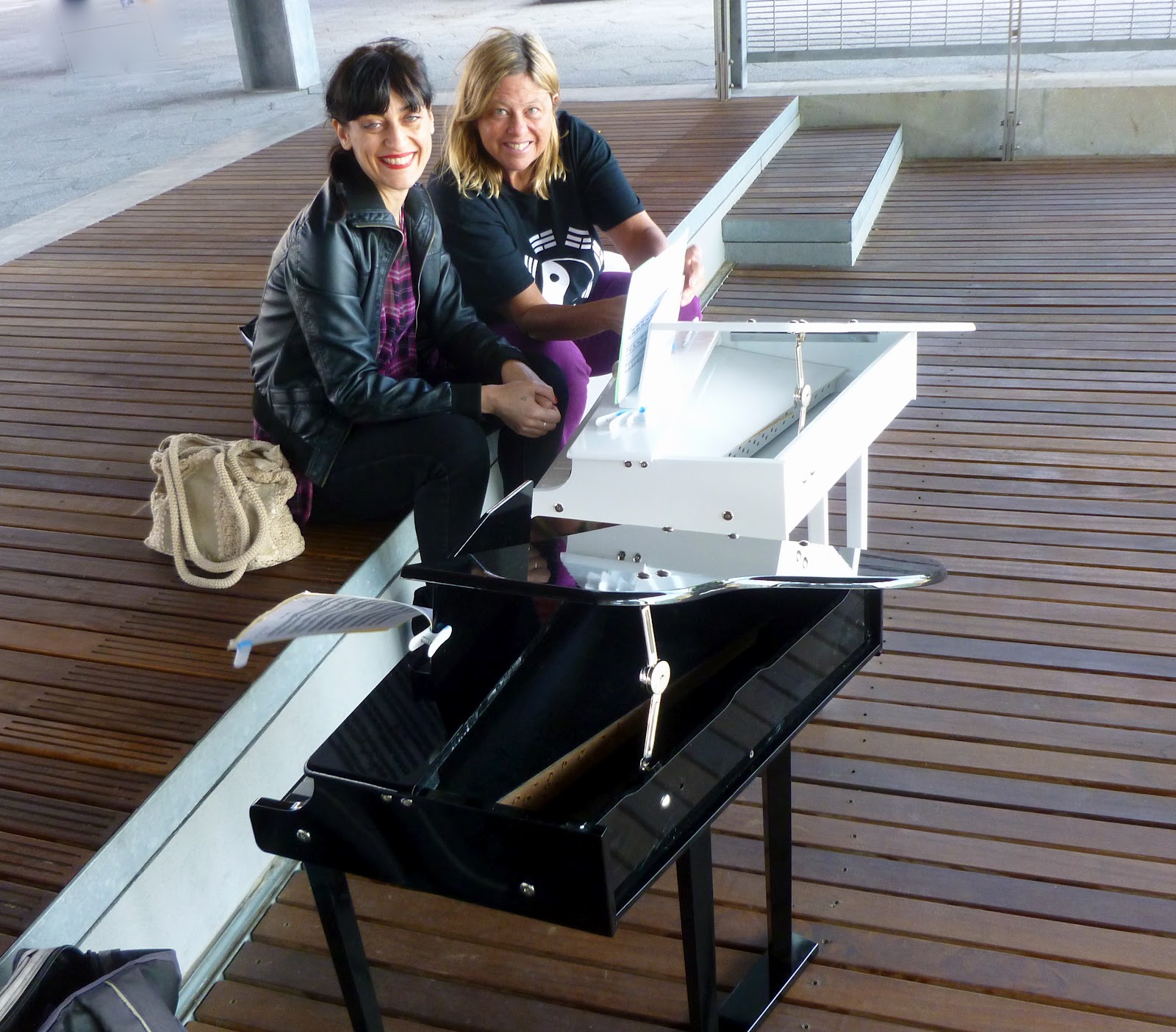
At 4:30, everybody started to play. The greatest challenge was to fold yourself up behind the piano in a half way comfortable position. Wendy, the composer had instructed us to play our piece four times, then take a 5 minute break and start over, another 4 times - until 8:30, with a half hour break. 
One set lasted between 15 and 20 minutes - I think we got faster over time. Sitting on the floor was too low, my arms got really tired; so I tried kneeling. That lasted until the break, then my partner Simone and I moved to the bottom of the stairs and sat on the steps. Security dropped a hint that we presented a safety hazard, but we pretended to be so absorbed in the music that we didn't hear it.


Um 16:30 fingen alle an zu spielen. Die groesste Herausforderung bestand darin, eine halbwegs komfortable Position am Instrument zu finden. Wendy, die Komponistin, hatte uns instruiert, unseren Part 4 mal hintereinander zu spielen, dann 5 Minuten Pause, dann wieder von vorn - bis 20:30, mit einer halben Stunde Pause. Ein Duchgang dauerte etwas 15-20 Minuten - im Lauf der Zeit sind wir etwas schneller geworden. Auf dem Boden zu sitzen war mir zu tief, die Arme wurden sehr schnell muede beim Spielen, so veruchte ich's mit Knien. Das ging bis zur Pause, danach zogen meine Partnerin Simone und ich zu einer Treppe um, wo wir uns auf die untersten Stufen setzen konnten. Das Sicherheitspersonal liess eine Bemerkung von wegen Sicherheitsrisiko fallen - in die Musik vertieft, taten wir so als haetten wir's nicht gehoert.

Musician on break
Musikerpause
 The break gave us a chance to wander around and visit all the other musicians, who were positioned all over Piers 15 and 16, in pairs or as soloists. 


Die Pause gab uns Gelegenheit, umherzuwandern, und die anderen Musiker zu besuchen, die ueberall auf den Pier 15 und 16 allein oder als Duett Aufstellung genommen hatten.


The Quartett
Das Quartett

Wendy Mae Chambers, the composer


It would have been fun to finish up the concert with a party. On the other hand, everybody was eager to get home after 4 hours of playing, and my mind felt about as fuzzy, as this picture.
It's too bad I don't have a sound file, but if you want an impression of the sound, check out a Gamelan orchestra on YouTube. The toy pianos don't have as much variety, but it's close.

Es waere nett gewesen, das Konzert mit einer Party zu beenden. Andererseits waren nach 4 Stunden Spielen alle darauf erpicht, sich auf den Heimweg zu machen, und meine Denkfaehigkeit war ungefaehr so unscharf wie dieses Foto. Leider habe ich keine Tonaufnahme, aber ein Gamelan Orchester vermittelt einen gewissen Eindruck, wenn auf der Klang der Spielzeugklaviere weniger Nuancen hat.    

Monday, June 18, 2012

K'un - The Rehearsal / K'un - die Probe


The first day of summer in New York is dedicated to music. “Make Music, New York” brings together players of different instruments and singers all over the city. I’ve always wanted to be part of it, and when my friend Marcia Eckert sent me a message with the headline “ This should be fun” I didn’t wait long to sign up. The appeal was directed at pianists, who would be willing to participate in a performance of Wendy Mae Chambers’ composition “Kun” for 64 toy pianos (link includes explanation and sound files), to take place on Thursday, June 21, between 4:30 and 8:30 on Piers 15 and 16 at New York City’s South Street Seaport, on the Southern tip of Manhattan. 
Via e-mail, the music arrived, the rehearsal schedule, a map of the location, instructions for the rehearsal and performance, and an inquiry regarding your T-shirt size - a free T-shirt is part of the deal. 
The official T-Shirt


Yesterday was the rehearsal. I had never been to South Street Seaport, and for a moment, I thought I was back in Boston, trying to make my ways through droves of tourists and souvenir booths, but once I had found Pier 15 (with the help of a friendly Hot Dog vendor), all I needed to do was follow the tinkle. A group of toy pianos were assembled on the lower level, and the visiting kids enjoyed it. 
My duet partner Simone (l) and composer Wendy Mae Chambers (r)

Playing a toy- piano is closer to playing a drum than a piano - “You have to really pound it, to make it sing,” said Wendy, the composer. The sound of the instrument resembles a bell - or do you remember the tinkle of the mechanical old cash-registers? Imagine that at different pitches, and you’re pretty close. 
Counting like squirrels
I’m player No 51, and since my duet partner, the unknown player No 52, named Ilya, T-shirt size XL, didn’t show up, the next person who arrived was assigned that part. Simone is a good sight reader, and within five minutes, we were ready to get our act together - and that was easier said than done. Each of the 64 parts of the piece represents one of the 64 hexagrams of the Chinese I Ching . It is based on 6 notes that form changing patterns throughout the piece. Technically, the music is not difficult to play, but you’ve got to count like a squirrel, and you better not lose your place! And that tempo change, especially where the E - section begins! Consecutive 16th notes change to triplets, and each note is supposed to be exactly as fast as the 16ths before, meaning the pace speeds up - and I’m so trained to keeping the beat across changing rhythms...
Getting from D to E
In one hour of rehearsal, we got it together exactly once, but I have a much better idea what it sounds like, and what belongs together. On Thursday, we will perform the piece 4 times at a time, then we get 5 minutes to stretch, and off we go again, for another 4 times, and that continues for 4 hours, with a half hour break at 5:30, so we can walk around and see how everybody else is doing. By the end of the performance, we will probably have reached a state of deep trance, unable to conjure up anything but the I Ching in our minds‘ ears. But one thing’s for sure: it’s going to be fun -
We did it!
and if you’re in the area, drop by and join the fun. 
The weather forecast predicts 97 degrees for Thursday, and South Street Seaport could be the place to beat the heat. There’s a constant fresh breeze (that keeps blowing the music off the music stand), plenty of space for sun- bathing (free benches, deck chairs, recliners etc), a pleasant garden,


Pier 15


Sun-bathing on pier 15 - shade is sparse, bring hats, umbrellas, sun lotion

You can see Bridges, Brooklyn and big Ocean Liners, 

Brooklyn and Manhattan Bridges


Brooklyn

Ocean liner - a bit farther away

and if you walk a bit, you can even get a glimpse at the Statue of Liberty through the trees. See you there!

Lady Liberty - about a 10-minute walk


-----------------------------------------
Der erste Tag des Sommers ist in New York der Musik gewidmet. “Make Music New York” bringt überall in der Stadt Instrumentalisten und Sänger zum gemeinsamen Musizieren zusammen. Ich wollte immer schonmal mitmachen, und als meine Freundin Marcia Eckert mir eine Nachricht mit der Überschrift “Das müsste Spass machen” schickte, habe ich nicht lange überlegt. Der Aufruf richtete sich an Pianisten, die bereit waren, bei einer Aufführung von Wendy Mae Chambers Komposition “Kun” (der link enthält eine Erklärung und Klangbeispiele) mitzumachen. Das Stück ist für 64 Spielzeugklaviere geschrieben, und wird am kommenden Donnerstag, 21.6.2012, zwischen 16.30 und 20.31 auf den Piern 15 und 16 an New York City’s South Street Seaport, an der Südspitze von Manhattan, gespielt.  
Per e-mail kamen die Noten, der Probenplan, ein Langeplan mit Standorten der Instrumente, Anweisungen für die Probe und das happening, und eine Anfrage nach der Konfektionsgrösse - ein T-shirt gehört mit zum Paket.

Das offizielle T-Shirt


Gestern war Probe. Ich war nie am South Street Seaport gewesen und kam mir vor wie in Boston, als ich versuchte mir einen Weg an Souvenirbuden vorbei durch die Touristenmenge zu bahnen. Als ich mit der Hilfe eines freundlichen Würstchenverkäufers Pier 15 fand, brauchte ich nur noch dem Geklingel nachzugehen. Eine Gruppe von Spielzeugklavieren war auf der unteren Etage versammelt, und die anwesenden Kinder freuten sich.

Meine Duett Partnerin Simone (l) und die Komponistin Wendy Mae Chambers (r)
Ein Spielzeugklavier zu bedienen ist eher dem Trommelschlagen als dem Klavierspiel verwandt - “Du musst wirklich ‘draufhauen, damit es singt,” sagte Wendy, die Komponistin. Der Klang des Instruments ist eher Klingel- ähnlich, so wie die alten mechanischen Registrierkassen, nur auf verschiedener Tonhöhe.
Zaehlen wie die Eichhoernchen
Ich bin Spielerin Nr 51, und da mein Duett Parter mit der Nr 52, ein mir unbekannter Ilya, T-shirt Grösse XL, nicht auftauchte, wurde der Part einfach an die nächste Person, die auf der Bildfläche erschien, weitergegeben. Simone kann gut vom Blatt spielen, und innerhalb von fünf Minuten waren wir zum Zusammenspiel bereit - und das war leichter gesagt als getan. Jede der 64 “Stimmen” steht für eins der 64 Hexagramme des Chinesischen I Ching. Es basiert auf 6 Tönen, die zu ständig wechselnden Mustern zusammengefügt sind. Technisch ist die Musik nicht schwierig zu spielen, aber man muss zählen wie ein Eichhörnchen und aufpassen, dass man nicht den Faden verliert! Und dann der Tempowechsel zu Beginn von Teil E! Durchlaufende 16-tel verwandeln sich in Achteltriolen, wobei die einzelne Note genauso schnell sein soll wie die 16- tel vorher - d.h. das Grundtempo wird schneller, und ich bin so darauf getrimmt, das Grundtempo bei wechselnden Rhythmen zu halten..

Wie kommt man von D nach E
In einer Stunde Probe haben wir’s genau einmal geschafft, ohne Panne durchzukommen, aber ich weiss viel besser, wie das Stück klingt, und wie die Stimmen zusammenkommen. Am Donnnerstag werden wir unseren Part 4 mal hintereinander spielen, dann gibt es eine kurze Atempause, und dann geht es weiter, 4 Stunden lang, mit einer halben Stunde Pause um halb sechs, so dass wir umhergehen und uns die anderen Teile des Stückes anhören können. Am Ende der Aufführung haben wir wahrscheinlich einen Zustand tiefer Trance erreicht, und sind unfähig, noch irgendwas anderes als das I Ching zu hören. Aber Spass macht es bestimmt, und wenn Ihr in der Gegend seid, lasst Euch den Spass nicht entgehen und kommt vorbei. 

Wir haben's geschafft!
Die Wettervorhersage stellt Temparaturen von 34 Grad in Aussicht, und South Street Seaport könnte der ideale Ort sein, um die Hitze auszuhalten. Es weht immer eine frische Brise ( und die Noten fliegen vom Notenpult), es gibt viel Platz zum Sonnenbaden ( Bänke und Liegestühle, alles völlig kostenfrei), einen angenehmen Garten, 

Pier 15


Sonnenbaden im Schatten der Hochhaeuser - der allerdings nicht ganz ausreicht bis zum Pier


Man kann Brücken, Brooklyn und Ozeandampfer sehen, 

Brooklyn- und Manhattan Bridge


Blick auf Brooklyn

Ozeandampfer - etwas weiter weg


und wenn man ein bischen spazieren geht, grüsst sogar die Freiheitsstatue durch die Bäume.

Lady Liberty gruesst durch die Baeume - etwa 10 Minuten zu Fuss von South Street Seaport