Showing posts with label Jeremy Denk. Show all posts

Monday, December 6, 2021

Bach’s music, fully alive - Jeremy Denk’s performance of the Well-Tempered Clavier Book 1 at the 92nd Street Y in New York City

Jeremy Denk (image from the internet)


If you'd all been at the concert - and I wished you had -  I wouldn’t have to write this blog entry. It’s not meant to be a “review.” Rather, it’s an attempt to share the impression the performance left in my mind through the inadequate means of language. 

Every time I’ve heard Jeremy Denk play, I left the concert hall with the yearning to keep the impression alive as long as possible, allow it to resonate undisturbed by listening to anything else. Once, I even skipped the symphony the orchestra was playing after Denk’s performance of a piano concerto for that reason. Fortunately, that wasn’t necessary after his solo tour de force through the entire first book of the Well-Tempered Clavier. People rose from their seats when the last note of the quiet and mysterious fugue had barely faded, and the applause wouldn’t end until the pianist sat down and played the first Prelude again, the one in C-major that starts the journey. That encore still glowed in the dark of the night at 12:45 am, while I walked the three blocks home from the bus station, the last leg of my two-hour trip from the city on public transportation. 

When its sound filled the concert hall, the journey through 24 Preludes and Fugues in all twelve keys of the circle of fifth came full circle.  In spite of its popularity, the piece is often played with little musical definition, a sequence of broken chords, like a “warmup” before the real thing begins.  Why did Bach put it there, in the first place, preceding one of the most dense and difficult fugues?  It’s so “easy,” you can pull it off with a minimum of piano skills, and then again, it’s not, when you take it as seriously as Denk did. I don’t think I’ve ever heard anyone play the piece with so much loving care, with attention to every single note, tremendous control of the sound and the pedal. If you can give someone a musical hug, this was it. 

You could argue that it could never have sounded like that on the instruments of Bach’s time; definitely not on the harpsichord; on the clavichord, which allows for some dynamic shaping of a phrase through the touch, maybe. It is known that the composer loved the instrument very much for those expressive qualities. 

My teacher Seymour Bernstein always says that Bach is the most “romantic” of all composers. Listening to Denk play reminded me of that. Every phrase was expressive, full of emotion, meticulously shaped within the transparency of the musical structure.  The extrovert pieces were very extrovert, fast and exuberant; the A-major fugue at breakneck speed, subject entries chasing each other like carefree children playing tag without fear of a stumble. If you can play it that fast - and he can -  be my guest. 

Exuberance was balanced by deep introspection and subtlety of sound in the pieces that feel like listening to a philosopher think, e.g. the fugues d-sharp and b-flat minor.

Something occurred to me that I’ve noticed before in Denk’s performances: even if I don’t  identify with an approach or with certain details, I always feel that the interpretation as a whole makes sense. Sometimes, it’s like listening to something you thought you knew with different ears - an important source of artistic inspiration. 

A most refreshing aspect of Denk’s interpretation of the Well-Tempered Clavier: there was nothing “academic” about it. I forgot about the musical genre of “Preludes and Fugues” and found myself simply listening to “music,” performed in a way that bridged boundaries between styles and times.  Sometimes, there was a glimpse of Chopin, at other times, Jazz, as if the pianist gathered everything that happened after Bach and brought it back to its beginnings.  

Awestruck at the pianistic skills, the musical insight and phenomenal memory that lead to a performance of such brilliance, intensity and expression, I would like to thank the artist for this inspiring concert and encourage everyone to hear him play when you get a chance. 


---------------------------------------------------------------------------------------------------

Jeremy Denk (Foto aus dem Internet)


Bach’s Musik, voller Leben - Jeremy Denks Aufführung des ersten Teils von Bachs Wohltemperiertem Klavier im 92nd Street Y in New York City


Ich wollte, ihr wärt alle beim Konzert gewesen, dann könnte ich  mir diesen Blogeintrag sparen. Es ist keine Konzertkritik, sondern ein Versuch, mit den unzulänglichen Mitteln von Sprache den Eindruck zu beschreiben, den die Musik in meiner Erinnerung hinterlassen hat.

Bei jedem Konzert von Jeremy Denk, das ich besucht habe, habe ich den Konzertsaal mit dem Bedürfnis verlassen, den Eindruck so lange wie möglich zu behalten, das Gehörte  nachklingen zu lassen, ungestört von von anderen musikalischen Eindrücken. Einmal habe ich deswegen sogar auf die Sinfonie verzichtet, die dem Klavierkonzert folgte, und bin früher gegangen. 

Zum Glück war das am Samstag Abend nicht notwendig, nach Denks Solo-Marathon durch den 1. Band von Bachs Wohltemperiertem Klavier. Das Publikum erhob sich von den Sitzen, kaum dass der letzte Ton verklungen war, und als der begeisterte Applaus nicht aufhören wollte, spielte der Pianist noch einmal das Präludium in C-Dur, mit dem das Wohltemperierte Klavier beginnt. Es leuchtete noch im meiner Erinnerung um viertel vor eins in der Nacht, als ich von der Bushaltestelle nach Hause ging, am Ende der zweistündigen Rückfahrt aus der Stadt mit U-Bahn und Bus. 

Als diese Zugabe im Konzert erklang, schloss sich der Kreis der 24 Präludien und Fugen in allen zwölf Tonarten des Quintenzirkels. Trotz seiner Beliebtheit wird der Ausdruck des Präludiums oft stiefmütterlich behandelt, eine simple Folge gebrochener Akkorde, etwas zum Aufwärmen, bevor die Reise wirklich beginnt. Warum hat Bach es an diese Stelle gesetzt, vor eine der dichtesten und schwierigsten Fugen? Es ist so “einfach” das man es mit relativ geringen pianistischen Fertigkeiten bewältigen kann, aber wenn man es ernst nimmt, so wie Denk, wird es anspruchsvoll. Ich weiss nicht, ob ich je zuvor eine so aufmerksame, liebevolle Interpretation gehört habe, die Töne mit grosser Sorgfalt aufeinander abgestimmt, unterstützt von sparsamem, aber bewusstem Einsatz des Pedals. Wenn es so etwas wie eine musikalische Umarmung gibt, dann war es dieses Stück. 

Natürlich könnte man argumentieren, dass es auf einem Instrument der Bachzeit so nie hätte klingen können. Für das Cembalo mag das wohl zutreffen; auf dem Clavichord, das wenigstens eine leichte dynamische Schattierung erlaubt, hätte es vielleicht funktioniert. Man weiss, dass Bach dem Instrument aus diesem Grund besonders zugetan war. 

Mein Lehrer Seymour Bernstein sagt immer, dass Bach der romantischste von allen Komponisten ist. Jeremy Denks Spiel erinnerte mich daran. Bewusst gestaltet hatte jede Phrase ihren eigenen Ausdruck innerhalb der polyphonen Struktur. Die extrovertierten Stücke waren sehr lebhaft, manchmal geradezu überschwänglich, wie die Fuge in A-Dur, in der sich die Themeneinsätze übermütig wie Kinder beim Nachlaufen jagten, ohne auch nur einen Gedanken an einen möglichen Sturz zu verschwenden. Das Tempo kam dem Ausdruck nicht in die Quere; im Gegenteil, und wenn jemand die Fuge so schnell spielen kann, kann ich das nur bewundern.  Dem Übermut stand tiefe Introspektion und feinste klangliche Nuancen in den ruhigen Stücken  gegenüber, wie den Fugen in Dis-moll und B-moll, bei denen man das Gefühl hat, einem Philosophen beim Denken zuzuhören. 

Was mir immer wieder bei Denks Interpretation auffällt: selbst wenn ich mich mit einem Ansatz oder mit Einzelheiten nicht identifizieren kann: als Ganzes ist sie immer stimmig. Manchmal ist es so, als hörte man ein Stück, das man gut zu kennen glaubt, plötzlich mit anderen Ohren - eine wichtige Quelle künstlerischer Inspiration.

Was mich an diesem Konzert besonders ansprach: die Interpretation hatte nichts “Akademisches.” Ich vergass “Präludien und Fugen” und hörte einfach nur Musik, gespielt in einer Weise, die Grenzen zwischen Jahreszahlen und Stilepochen hinter sich liess. Manchmal klang es wie Chopin, oder man fühlte sich an Jazz erinnert; als hätte der Pianist alles eingesammelt, was musikalisch nach Bach passiert ist, und zu seinem Ursprung zurückgebracht. 

In grosser Bewunderung der pianistischen Fertigkeiten, der musikalischen Einsicht und der phänomenalen Gedächtnisleistung, die hinter einer Aufführung von solcher Brillanz, Intensität und Ausdruckskraft  stehen, möchte ich dem Künstler für dieses inspirierende Konzert danken und jeden, der die Gelegenheit hat, ihn spielen zu hören, ermutigen, sie nicht zu verpassen. 


Monday, May 25, 2015

Beethoven Piano Sonata Marathon


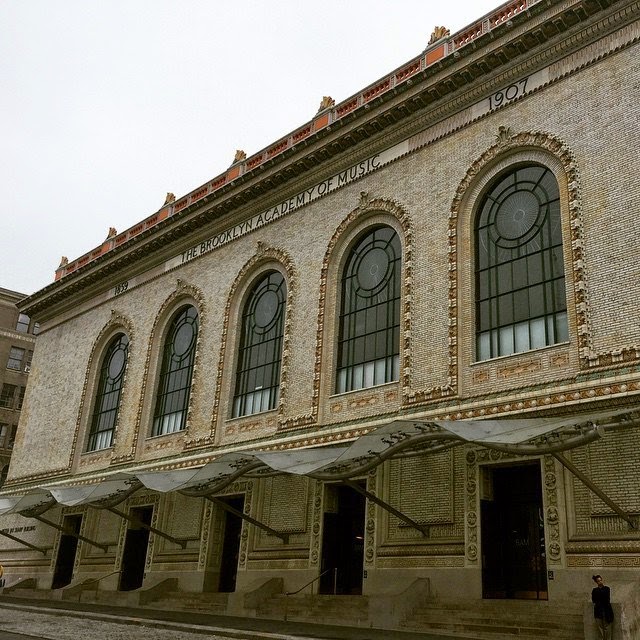
When WQXR - New York’s radio station for classical music - announced a Beethoven Sonata Marathon at the Brooklyn Academy of music to be held on May 9th I was glad that the gig had fallen through I was supposed to play on that day. It meant no fee, of course, but memorial services can be a bit heavy on the spirit. I couldn’t imagine a better way to celebrate life than listen to all 32 of Beethoven’s piano Sonatas. Confidently, I bought the all-day pass.


The Brooklyn Academy of Music


On the day of the event a long line of listeners has already assembled in the lobby when I arrive at BAM (Brooklyn Academy of Music) shortly before 10 am. The contents of the “goodie bag” I’m given is a nice addition to the sandwiches I’ve brought to last me through the day: banana, crackers, energy bar, chocolate and water. It is reserved exclusively for those who plan to sit through the entire event. I pick up my all-day pass and tickets and join the line. 
program, tickets and day pass

Since I committed a few weeks ago, I’ve had second thoughts. In 2011, I attended the greater part of WQXR’s first marathon of Beethoven’s piano sonatas at the Greene Space in Manhattan. Jeremy Denk was the discovery of the day. He played the Hammerklavier Sonata and the last one, No 32 op 111 in c-minor.  I’ll never forget the intensity of that impression, and I couldn’t imagine that anyone or anything could top that. Trying to repeat an experience often leads to disappointment.

I could be home, practicing, and maybe I should.  I have another gig to play, the performance is in two days. I comfort myself that I can always leave if my nagging conscience gets the upper hand. That’s the last I think of the gig, before the elevator takes us up to the concert hall on the fourth floor.

We enter a plain chamber music hall with rising rows of seats. A concert grand with the lid raised stands in the front of a row of large windows. There is no stage. No TV screens either, to show close-ups of the performer’s hands on the keyboard. Semi-transparent screens shield us from the view of the outside world, and the shadow of a construction crane suggests that we aren’t missing out on anything. There are no classrooms on the floor, no “traffic” from students attending lessons or waiting parents. There’s only the audience who has come to hear the marathon, the performers and the staff. It feels a little bit like being on top of a lighthouse. For the next 13 hours, it will be just us and Beethoven’s music.

The concert hall
The Sonatas aren’t presented in chronological order. Instead, each of the six recitals (click the link for the program)  contains works from different periods of the composer’s life, giving an overview of his entire creative process for those who can’t stay the whole time.

Sonata no 1 in F-minor, op 2, no 1 opens the program. It’s often the first “real” Beethoven-Sonata piano students lay their hands on. It was my first, in college, or maybe still in High School – I was not a very advanced player back then. The emotional intensity of the music fascinated me. This was the most serious stuff I’d played so far. It was also my first experience of Beethoven Sonatas getting harder the longer you practice them. Tension builds up over long stretches of the way. Keeping the tempo and sustaining the energy was a challenge for me. Stephen Beck’s interpretation touches me as transparent and classical in style, Haydn or Mozart shining through.

I haven’t played the second Sonata on the program, No 12 in A-flat major op 26, but I know it well, and it is one of my favorites. You can hear the opening theme of the late Sonata op 110 shine through the theme of the variations. It has some of that same warmth and longing. My college friend Gudrun prepared op 26 for finals, and I heard it every other day when she and I got together to play for each other in the weeks leading up to the exam. She is a rather outgoing person and hated the third movement, the funeral march.

After I got my college degree I worked on the sonata with Markus, one of my first piano students. He eventually prepared it for college auditions. I was quite nervous about “doing things right” with Beethoven, and anxious how my suggestions would hold up in front of the jury.

Gloria Chien’s warm and sensitive interpretation of the Sonata speaks to me, and so does Ran Dank’s outgoing, expressive and exuberant performance of op 31 No 2, “The Tempest.” An image rises up in my mind to the sounds: Oxana Yablonskaya, with whom I was studying at the time, playing the sonata at a concert in Germany. Selected readings from Thomas Mann were inserted between the movements. I found them distracting. But then, this was thirty years ago, at a time when everything sounded like a blur, compared to what I hear now. It’s amazing how your state of mind and experience are part of your perception.

During one of the intermissions I find myself taking stock of the Sonatas I have played. Op 2 no 1 was followed by op 10 No 1. I seriously considered dropping out of college over the challenge of figuring out the rhythm of the second movement. My college professor suggested op 10 No 2, and the last movement went over the edge more often than not when I played it. Then, I persuaded him to let me play op 27 No 2, the “Moonlight Sonata.” He didn’t think I’d master the turmoil of the last movement, but my love for the piece expanded the possibilities of my technique. Years later, I had a similar experience with a teenage student, who had started to learn the piece by herself over the summer. 

In all, my encounter with Beethoven sonatas as a college student wasn’t a big success. They always brought me to the verge of my technical abilities, and I had a hard time puzzling together the conflicting emotions. My parents gave me the recording by Alfred Brendel. It was the only one I knew. His somewhat distanced, intellectual interpretation did nothing to bring them closer to my heart. 

After college I began to attend master classes. That opened a whole new world. Beethoven Sonatas will forever be connected with the memory of the late Jürgen Uhde, whose books on Beethoven’s piano music I still consult when I play or teach them. The university in Weingarten, Germany became a sanctuary of music at Easter and in the summer. Like–minded people came together to explore the truth behind the notes of the score under the guidance of the master. I find myself listening for some of Uhde’s suggestions: keeping the basic pace, “Tempoachse,” ( the underlying feeling of a continuous pace) as he called it, throughout a set of variations of different character, and I check whether the beginning of the Waldstein Sonata feels as if the ground is starting to shake.

I began to discover the late sonatas in Uhde’s courses, but it would take another twenty-five years until I dared to learn them myself under the guidance of Seymour Bernstein, and perform them eventually.  

I look around and wonder what’s going through the minds of the other audience members as they listen to the music. “He played the Moonlight Sonata as if he was in a hurry to catch the train,” someone says. I would put it a little more gently, but I also felt that it was too fast, and too straightforward, lacking space and breath.  I wonder whether the pianist was afraid of appearing sentimental…

What is supposed to go through our minds when we listen to music? Intellectual recognition of form and structure, as music appreciation classes in high school seemed to suggest? As the order of the program takes us through all stages of Beethoven’s creative process time after time throughout the day it strikes me how the spirit of the late Sonatas occasionally flashes up in early works.

On the side, I notice things I point out to my piano students when I teach. Traditionally, the recapitulation of a sonata form rounds things up, conveys a feeling of resolve and reconciliation. Beethoven makes it part of a development that never stops. It’s one process going through from the beginning to the end. I don’t think about this as I listen. It just comes to my attention – and it probably wouldn’t if I didn’t know.

Are we supposed to judge the interpretation and the skills of the pianist? When something rubs me the wrong way, I often distance myself and search for reasons. They are usually much easier to describe than the impression of a perfect performance that connects the composer, the pianist and the listener, because it strikes a chord in our hearts, and appeals to something we all share.

Throughout the day, the sounds blend with images, feelings and memories.  What takes up half a page when you put it into words, appears like a flash in my mind in reality; pictures, the reminiscence of emotions, evoked by the music. They bring a moment of the past to the present, and the impressions merge. I’m not daydreaming; I’m listening. I’ve brought the score and follow it, mostly for the pieces I don’t know so well. I hear and feel music, that’s all, almost as if I were practicing.

Late at night, a group of intrepid audience members, who’ve stuck it out until the end, heads home on the subway. Beethoven’s music brought us together for a day, now we return to different destinations. “After a while, you didn’t hear individual pianists, you just heard Beethoven’s music,” somebody says. Stewart Goodyear, one of the pianists who performed in the marathon, is traveling with us.

“That’s the way it’s supposed to be,” he says. I remember his performances of op 10 No 3 and op 22 for their technical brilliance, power of expression and musical presence. Goodyear has played the entire sonata cycle by himself, in a ”sonatathon” a one-day event, interrupted only by a one-hour break for lunch and dinner.

Someone speaks out what we all think: “How in all the world can you do it?” “You have to live with the sonatas until they become part of you,” he replies. 

Some of that happened to us today, I think as I board the midnight bus to New Jersey. Daria Rabotkina’s op 111 still resounds in my mind. It’s amazing what you hear when you’ve played the piece yourself and know every note. I loved the “feminine touch” she gave the piece, a certain softness, roundedness of the sound, a sensitivity that shaped the “stardust” of the fourth variation into a continuous string of melodies.

The marathon was a journey to a different place. We left the world behind to look at it from a different point of view.  Some of that remains as you go back to every day life, just as you remember a look at the starlit sky after daybreak.


Als WQXR - New York’s Radiosender für klassische Musik – für den 9. Mai einen Marathon aller Klaviersonaten von Beethoven ankündigte, was ich sehr froh, dass die Mucke ausgefallen war, die ich an diesem Tag eigentlich spielen sollte. Zwar gab es so auch kein Honorar, aber Gedenkfeiern für Verstorbene hinterlassen oft eine etwas gedrückte Stimmung. Ich konnte mir keine bessere Art und Weise vorstellen, das Leben zu feiern als mir alle Beethovensonaten anzuhören, und kaufte mir zuversichtlich die Tageskarte.

The Brooklyn Academy of Music

Am Tag des Ereignisses hat sich bereits eine lange Schlange im Foyer angesammelt, als ich kurz vor 10 Uhr morgens an der Brooklyn Academy of Music (BAM) ankomme. Der Inhalt der Tragetasche die mir überreicht wird ist eine willkommene Ergänzung zum mitgebrachten Butterbrotpaket: eine Banane, ein Päckchen Kräcker, etwas Schokolade, ein Müsliriegel, eine kleine Flasche Wasser. Das gibt’s aber nur für die Unermüdlichen, die sich vorgenommen haben, bis zum Ende durchzuhalten. Ich nehme meine Tageskarte in Empfang und reihe mich in die Schlange ein. 

Programm und Tageskarte

Ehrlich gesagt sind mir einige Zweifel gekommen, seit ich die Karte vor ein paar Wochen bestellt habe. Vor vier Jahren hörte ich den grössten Teil von WQXR’s erstem Beethovensonaten –Marathon, in der Greene Space, einem Aufnahmestudio in Manhattan. Die Entdeckung des Tages war der Pianist Jeremy Denk. Er spielte die Hammerklaviersonate, und die letzte Sonate, op 111. Die Intensität seines Spiels war unvergesslich, und ich kann mir nicht vorstellen, dass das zu übertreffen ist. Der Versuch, ein glückliches Erlebnis zu wiederholen, führt nicht selten zu Enttäuschung.

Ich könnte und sollte jetzt vielleicht zu Hause sein und üben. Ich habe eine weitere Mucke an Land gezogen, und die Aufführung ist übermorgen. Ich tröste mich damit, dass ich jederzeit gehen kann, wenn mein schlechtes Gewissen die Oberhand bekommt. Das ist das letzte Mal, das ich an die Mucke denke, und dann bringt uns der Aufzug zum Konzertsaal im 4. Stock. 

Es ist ein nüchterner Kammermusiksaal mit ansteigenden Sitzreihen. Es gibt keine Bühne, auch keine Bildschirme, auf denen man die Hände der Pianisten auf der Tastatur in Nahaufnahme verfolgen kann. Ein Konzertflügel mit hochgestelltem Deckel steht vor einer Reihe grosser Fenster. Jalousien lassen Licht durch, verdecken aber den Blick auf die Welt draussen. Der Schatten eines Baukrans lässt ahnen dass wir nicht viel verpassen.

Auf der Etage sind keine Klassenräume. So man hört keinen Betrieb von Schülern, die zum Unterricht gehen oder die Gespräche wartender Eltern auf dem Flur. Hier sind nur das Publikum, die Pianisten, die Platzanweiser und die Ansager von der Rundfunkstation. Man kommt sich ein bischen vor wie auf einem Leuchtturm. Für die nächsten dreizehn Stunden gibt es hier nur uns und Beethovens Musik.

Der Konzertsaal
Die Sonaten werden nicht in chronologischer Reihenfolge vorgetragen. Jedes des 6 Konzerte (der link führt zum Programm) enthält Werke aus allen Schaffensperioden des Komponisten. So bekommen auch Zuhörer, die nicht den ganzen Tag bleiben können, eine Eindruck der Gesamtentwicklung.

Die Sonate no 1 in f-moll, op 2, no 1 eröffnet das Programm. Es ist oft die erste „richtige“ Beethovensonate, die man als Klavierschüler unter die Finger bekommt. So war es auch für mich, in der Hochschule, oder vielleicht noch im Gymnasium 0 ich war keine besonders fortgeschrittene Spielerin. Die Musik hatte eine Intensität, die mich faszinierte. Hier ging es zur Sache, das war ernst. Ich erfuhr auch zum ersten Mal, dass Beethoven Sonaten schwerer werden, je länger man sie übt, weil man die Schwierigkeiten am Anfang meist unterschätzt. Die Spannung in diesem Stück baut sich über lange Strecken hin auf. Es gelang mir nur schwer, das Tempo zu halten, und meine Kondition stiess an ihre Grenzen. Für Stephen Beck, der die Sonata heute im Konzert spielt, ist das alles natürlich kein Problem. Seine Interpretation ist transparent und klassisch; sie richtet die Aufmerksamkeit auf den Einfluss von Mozart und Haydn.

Die zweite Sonata im Programm, No 12 in As-Dur op 26, habe ich nicht gespielt, aber ich kenne sie gut, und sie ist eins meiner Lieblingsstücke. Man ahnt die späte Sonate op 110, spürt die Wärme der gemeinsamen Tonart, dieselbe Sehnsucht. Meine Freundin Gudrun bereitete die Sonate für das Schulmusikexamen in der Hochschule vor. Über Wochen hörte ich sie jeden zweiten Tag, wenn wir uns trafen, um uns gegenseitig vorzuspielen. Temperamentvoll wie sie ist, konnte Gudrun den „Trauermarsch“ nicht ausstehen.

Einige Jahre später unterrichtete ich die Sonate. Markus, einer meiner ersten Klavierschüler, bereitete sie für die Aufnahmeprüfung vor. Ich hatte einen Heidenrespekt vor Beethoven, und konnte nur hoffen, dass meine Vorschläge zur Interpretation vor der Jury standhalten würden.

Gloria Chiens warme und sensible Interpretation der Sonate spricht mich an, denau wie Ran Dank’s temperamentvolle und ausdrucksstarke Aufführung der „Sturmsonate“ op 31. Ein Bild steigt in meiner Erinnerung auf: Oxana Yablonskaya, bei der ich einige Jahre Unterricht nahm, spielt die Sonate in einem Konzert auf einem Schloss bei Erftstadt. Zwischen die Sätze waren Lesungen von Texten Thomas Manns eingefügt, die mich ablenkten. Aber das ist dreissig Jahre her. Damals kam mir alles wie ein diffuser Schwall von Klängen vor, verglichen damit wie ich die Musik heute höre. Faszinierend, wie Erfahrung und die Fähigkeit zur Konzentration die Wahrnehmung beeinflussen.   

In einer Pause ziehe ich Bilanz über die Beethoven Sonaten, die ich gespielt habe. Auf op 2 No1 folgte op 10 No 1. Aus Verzweiflung über den Rhythmus der Passagen im 2. Satz zog ich ernsthaft in Erwägung, das Studium abzubrechen. Zum Glück kam es nicht dazu. Als nächstes schlug mein Lehrer an der Hochschule op 10 Nr 2 vor, trotz des schwierigen letzten Sates, der mir meistens daneben ging. UN bedingt spielen wollte ich die „Mondscheinsonate.“ Meinen Lehrer musste ich dazu überreden, er glaubte nicht, dass ich den Herausforderungen des letzten Satzes gewachsen war, aber die Liebe zu dem Stück überwand meine technischen Grenzen. Viele Jahre später machte ich eine ähnliche Erfahrung mit einer Schülerin, die sich das Stück über die Sommerferien selbst beigebracht hatte.

Alles in allem war meine Begegnung mit den Beethovensonaten als Studentin kein grosser Erfolg. Ich war ihnen technisch nicht gewachsen, und konnte die oft hart aufeinanderprallenden Gegensätze des Ausdrucks nicht miteinander vereinbaren. Meine Eltern schenkten mir die Gesamtaufnahme der Sonaten von Alfred Brendel. Es war die einzige, die ich kannte, und die etwas distanzierte, intellektuelle Interpretation tat nichts, um sie mir näherzubringen.

Nach der Hochschule fing ich an, Meisterkurse zu besuchen. Das eröffnete eine ganz neue Welt. Bis heute sind die Beethoven Sonaten für mich mit der Erinnerung an Jürgen Uhde verbunden. Nach wie vor ziehe ich seine Bücher über Beethovens Klaviermusik zu rate, wenn ich sie spiele oder unterrichte. Die Hochschule in Weingarten wurde zu einer Pilgerstätte, wo sich Gleichgesinnte trafen und unter Anleitung des Meisters nach der Wahrheit hinter den Tönen suchten. Immer noch achte ich darauf, ob ich die „Tempoachse“ – das Gefühl eines kontinuierlichen Tempos - in einer Folge kontrastierender Variationen spüren kann, und ob der Beginn der Waldsteinsonate so klingt als würde der Boden zittern.

In Uhdes Kursen entdeckte ich die späten Sonaten. Es würde noch fünfundzwanzig Jahre dauern, bis ich mich unter Anleitung von Seymour Bernstein traute, sie zu lernen und aufzuführen.

Ich sehe mich um und frage mich, was wohl in den Köpfen der anderen Konzertbesucher vorgeht, während sie zuhören. „Der hat die Mondscheinsonate gespielt als hätte er’s eilig, den Zug noch zu kriegen,“ kommentiert jemand in der Reihe vor mir. Ich würde es etwas milder ausdrücken, aber ich fand es auch zu schnell und atemlos. Ob der Pianist wohl Angst hatte, sentimental zu wirken, wenn er dem Stück mehr Raum gab, frage ich mich.

Was soll in unseren Köpfen vorgehen, wenn wir Musik hören? Erkennen von Struktur und Form, wie es uns im Musikunterricht im Gymnasium nahegebracht wurde? Wieder und wieder führt uns die Programmfolge der sechs Konzerte durch Beethovens Schaffensperioden, und ich finde es faszinierend, wie der Geist der späten Werke oft in viel früheren Stücken aufblitzt.

Am Rande bemerke ich Einzelheiten auf die ich meine Klavierschüler im Unterricht aufmerksam mache. Wie die Rekapitulation, die traditionell die Sonatenhauptsatzform abrundet, bei Beethoven zum Bestandteil einer fortlaufenden Entwicklung wird, die vom Beginn des Satzes bis zum letzten Ton führt. Ich höre es ohne darüber nachzudenken. Ich bemerke es einfach nur; und wahrscheinlich würde das nicht geschehen, wenn ich es nicht wüsste.

Sollen wir die Interpretation und die Technik des Pianisten beurteilen? Meistens passiert mir das, wenn mir etwas unangenehm aufstösst. Ich distanziere mich und suche nach Gründen, die ich meistens viel genauer beschreiben kann als die ideale Aufführung, die Komponist, Interpret und Zuhörer vereint, weil sie etwas in uns anrührt, und etwas zum Ausdruck bring, das uns allen gemeinsam ist.

Den ganzen Tag über vermischen sich die Klänge der Musik mit Bildern, Gefühlen und Erinnerungen. Was auf dem Papier eine halbe Seite einnimmt, erfasst mich in Wirklichkeit im Bruchteil einer Sekunde; das sind ein Bilder, Nachklänge von Empfindungen.  Sie bringen Augenblicke aus der Vergangenheit in die Gegenwart, und die Eindrücke verschmelzen. Das sind keine Tagträume. Ich habe die Noten dabei und lese mit, vor allem bei den Stücken, die ich weniger gut kenne. Ich höre und fühle jeden Ton, das ist alles -fast wie beim Üben.

Spät in der Nacht findet sich eine kleine Gruppe der Unermüdlichen in der U-Bahn. Wir haben bis zum Ende durchgehalten. Für einen Tag hat uns Beethovens Musik zusammengebracht, nun führen unsere Wege in unterschiedliche Richtungen. „Nach einger Zeit hörte man keine unterschiedlichen Pianisten mehr,“ sagt jemand, „sondern nur noch Beethovens Musik.“ Stewart Goodyear, einer der Pianisten der am Abend gespielt hat, hat sich zu uns gesellt.

„Genauso soll es sein,“ sagt er. Sein Spiel ist noch sehr lebhaft in meiner Erinnerung, die Sonaten op 19 No 3 und op 22, technisch brillant, ausdrucksstark und musikalisch präsent. Goodyear spielt den gesamten Zyklus der Beethoven Sonaten allein, in einer ganztägigen Veranstaltung, die  er „Sonatathon“ nennt.

Jemand spricht aus, was wir alle denkt: „Wie in aller Welt machst du das?“ „Du musst mit der Musik leben bis sie ein Teil von Dir wird,“ antwortet er.

Etwas davon ist heute mit uns passiert, denke ich, als ich um Mitternacht in den Bus nach New Jersey steige. Die Klänge der letzte Sonate, op 111, gespielt von Daria Rabotkina sind immer noch lebendig. Es ist erstaunlich, was man alles hört, wenn man ein Stück selber gespielt hat und jeden Ton kennt. Der „feminine Zug“ ihrer Interpretation sprach mich an, der runde, weiche Klang, die Sensibilität, die den „Sternennebel“ der 4. Variation zu einer endlosen Melodienfolge gestaltete.

Der Marathon war wie eine Reise zu einem anderen Stern. Wir haben die Welt hinter uns gelassen, um sie von einem anderen Ort aus anderer Perspektive zu betrachten. Etwas davon bleibt, und reicht hinüber in den Alltag, genauso wie die Erinnerung an den Sternenhimmel auch nach Tagesanbruch nicht verlorengeht.


Thursday, May 30, 2013

The PIanist and the Person / Pianist und Person


I had packed up and was ready to head out to the library when the music playing on the radio caught my attention. I don’t remember the piece, but I do remember that the playing was beautiful - so beautiful that I had to sit down and listen, all the way to the end. The library would have to wait. I wonder who the performer is, I thought. The announcement came: “Evgeni Kissin.”  

Evgeni Kissin! Many regard him as one of the greatest pianists who ever lived. I’ve heard him live in concert two or three times - and to tell the truth, my enthusiasm was limited.

I’m not even sure it has anything to do with the way he plays. He can do anything at the piano. His interpretations are full of expression, there are all those colors of sound, his technique is stupendous. It’s almost superhuman - and maybe that’s what disturbed me in concert. There seemed to be something “cold” about it, as if he was “above,” rather than “in” the music. 

My favorite pianist these days is Jeremy Denk, whose interpretations are also full of expression, colors of sound, and whose technique is stupendous. What strikes me most about him is the way he “becomes” music when he plays - it doesn’t even matter whether I agree with every detail of the interpretation. “Becoming” the music - that “Zen” ideal - is what I personally value most with any musician, and strive for myself. I believe you can tell the difference whether someone “does” something, or whether he or she “is” something in playing.

Or am I just fooling myself? I have to admit that there are a couple of other things about Jeremy Denk that I find very appealing - his wit and his intelligence, that come across in his program notes, essays and blog entries; the fact that he sometimes wears black jeans and a jacket rather than a tux when he performs - there’s something unpretentious, human about him. He comes across as “the guy from next door,” who turns into the most magical music the moment he goes on stage and touches the piano, whereas Kissin represents more of the “old style” artist, the magician, the king of the music enthroned above the audience. 

Ultimately I have to admit that my reaction to an artist is anything but immune to “external” stimuli. There is something about the aura of a pianist - and any person, for that matter - that either attracts me or turns me off. 

It became very evident when I was watching the live streaming of the van Cliburn piano competition the other day. Now, that really got me into trouble. Close-ups of the camera are merciless, and I really don’t need an illustration of the emotions in the music on the performer’s face; on the contrary, I find it distracting and occasionally repulsive. 


There’s nothing wrong with an elegant concert gown, but sometimes I can’t help suspecting an attempt to manipulate the audience and the jury with non- musical means. I imagine it is very uncomfortable to play in a tux, but it does look more “objective.”

In the end, I picked up some cross-stitch and just listened. 

Before each performance there is a short feature about each contestant. They talk about their favorite colors, composers, their family situation etc. Do we need all this extra information ? When you’re serious about music, everything you feel and think goes into your playing anyway. Is it a bait to make the competition more appealing and interesting to people who would not otherwise follow it? They might take a liking to classical music, and maybe that’s not such a bad thing. 

One contestant talked about his religious beliefs. I don’t know whether the judges get to see those things, but if I were a judge, I couldn’t help thinking, how would I react to that?  It would have an impact, I’m sure. In some way or other I would have to deal with the “imprint” of the information. Aware of my own bias, I might even overcompensate rather than hold it against the contestant. I know I’ve done it occasionally when I was judging, especially when peer pressure came up in the discussion, when I wasn’t completely sure of myself and realized that I was standing alone with my opinion. That said, I liked the practice of a student competition in New Hampshire where the judges didn’t even get to know the names of the contestants, let alone where they came from or who taught them, until the results were out. 

The results of music competitions are not objective - and that’s ok, as long as you’re aware of the fact. They are drawn from a pool of opinions of experts, and separating the playing from the person is probably as hard for them as it is for the rest of us. Maybe the separation is not even desirable, but the focus shifts more easily if the person gets more attention.

Beyond the actual skills of an artist, it’s marketing that makes a career. It’s the “image” someone creates of himself that sells. Ultimately, the complex impression of a person is reduced to the categories “like” and “dislike” on facebook or youtube, and those are the votes that really count.

Each of the young artists who participate in the van Cliburn competition plays well enough to deserve a career. The presentation they are given in the online streaming reveals what big competitions really are: major marketplaces for sales and advertising.

-----------------------------


Pianist und Person

Ich hatte alles zusammengepackt, um zur Bücherei zu fahren, als die Musik im Radio mich innehalten liess. Ich weiss nicht mehr, welches Stück es war, aber es war so schön gespielt, dass ich mich hinsetzte und zuhörte, bis zu Ende. Die Bücherei konnte warten. Wer hat wohl gespielt, dachte ich. Evgeni Kissin, kam die Ansage.

Evgeni Kissin! Viele sehen ihn als einen der grössten Pianisten aller Zeiten. Ich habe ihn zwei- oder dreimal im Konzert gehört, und muss gestehen, dass meine Begeisterung Grenzen hatte. 

Ich bin noch nichtmal sicher, dass es etwas mit seinem Spiel zu tun hatte. Er kann alles am Klavier. Seine Interpretation ist ausdrucksstark, voller Klangfarben, seine Technik ist atemberaubend, schon fast übermenschlich. Vielleicht war es genau das, was mich störte. Irgendetwas war kalt an dem Spiel, als stände er über, statt in der Musik.

Mein Lieblingspianist zur Zeit ist Jeremy Denk; seine Interpretationen sind ebenfalls ausdrucksstark, voller Klangfarben, und seine Technik ist atemberaubend. Was mich besonders beeindruckt ist die Art und Weise, wie er selbst Musik wird, wenn er spielt - es macht nichts, wenn ich nicht mit jeder Einzelheit der Interpretation einverstanden bin.    “Zu Musik werden”, dieses Zen Ideal ist es, was mich am meisten an einem Musiker beeindruckt, und worum ich mich selber bemühe. Ich glaube, man kann den Unterschied fühlen, ob jemand das “ist”, was er tut oder ob er nur etwas tut.

Oder mache ich mir nur etwas vor? Ich muss zugeben, dass es noch einige andere Dinge gibt, die mir and Jeremy Denk gefallen - seine geistreichen Programmnotizen, Essays und Blog Einträge; die Tatsache, dass er gelegentlich in schwarzen Jeans und Blazer statt im Frack auftritt - irgendwas an ihm wirkt unprätentiös und menschlich. Er verkörpert den “Typ von nebenan,” der zu wunderbarer Musik wird, sobald er die Klaviertasten berührt. In Evgeni Kissin sehe ich mehr den Künstler alter Schule, den Magier, den König der Musik, der über dem Publikum steht.

Ich muss mir eingestehen, dass ich gegenüber aussermusikalischen Einflüssen alles andere als immun bin. Es gibt etwas in der Aura des Pianisten - genauso wie in der Aura anderer Menschen - das mich etweder anzieht oder abstösst.

Es wurde mir sehr bewusst als ich vor ein paar Tagen einen Ausschnitt aus der Live-Übertragung des van Cliburn Klavierwettbewerbs ansah, da bekam ich wirklich Probleme. Die Kamera kennt keine Distanz, sie ist gnadenlos, und ich mag es nicht, wenn sich jede Gefühlsregung in der Musik in entsprechenden Grimassen widerspiegelt. 

Ein elegantes Konzertkleid ist ok, aber manchmal schleicht sich doch der leise Verdacht einer versuchten Jury- und Publikumsbeeinflussung mit aussermusikalischen Mitteln ein. Ich stelle es mir sehr unbequem vor, im einem Anzug spielen zu müssen, aber es sieht “objektiver” aus.  

Schliesslich schnappte ich mir eine Handarbeit und beschränkte mich aufs Zuhören.

Vor jedem Auftritt wird ein kurzer Beitrag über die Wettbewerbsteilnehmer ausgestrahlt. Sie sprechen über ihre Liebkingsfarben, Lieblingskomponisten, familiäre Situation etc.  Brauchen wir diese Information? Wenn man Musik ernst nimmt, spiegelt sich was man denkt und fühlt sowieso im Spiel wider. Ist es ein Köder, um den Wettbewerb interessanter zu machen für Menschen, die nicht soviel von Musik verstehen, und ihn sonst nicht verfolgen würden? Vielleicht stellen sie ja fest, dass ihnen klassische Musik gefällt, und das wäre ja nicht so schlecht.

Ein Wettbewerbsteilnehmer sprach über seine religiösen Überzeugungen. Ich weiss nicht, ob die Jury Zugang zu diesen Videos hat, aber wenn ich Jurymitglied wäre, weiss ich, dass so etwas einen Einfluss hätte, schon allein dadurch, dass ich die Information verarbeiten müsste. Das Bewusstsein meines Vorurteils könnte mich sogar dazu bewegen, besser zu bewerten. Ich weiss, dass ich das gelegentlich als Jurymitglied getan habe, vor allem unter dem Druck anderer Meinungen, wenn ich mir nicht sicher war und mit einem Urteil allein stand. Einen Schülerwettbewerb in New Hampshire habe ich in guter Erinnerung; da erfuhr man sogar die Namen der Kandidaten erst bei der Bekanntgabe der Resultate.

Die Resultate von Musikwettbewerben sind nie objektiv, und ich finde das in Ordnung, so lange man sich darüber im Klaren ist. Sie sind das Ergebnis der Meinungen von Experten, denen es wahrscheinlich genauso schwer faellt, die Person und den Pianisten auseinanderzuhalten wie allen anderen auch. Vielleicht ist die Trennung gar nicht wünschenswert, aber je mehr Aufmerksamkeit der Person zuteil wird, desto mehr verschiebt sich der Schwerpunkt.

Über das eigentliche Können  hinaus bestimmt oft das Marketing die Karriere. Es ist das Image, das sich verkauft, das Bild, das jemand von sich selbst herstellt. Der komplexe Eindruck von einer Person reduziert sich bei facebook und youtube auf “gefällt mir” und gefällt mir nicht,” und auf dieser Basis kann dann abgestimmt werden. 

Pianistisch haben alle jungen Künstler, die am van Ciburn Wettbewerb teilnehmen, das Zeug für eine Karriere. Die Präsentation wirft ein Licht darauf, was bekannte Wettbewerbe wirklich sind: Grossmärkte für Werbung und Verkauf. 


Monday, February 20, 2012

Musical Communcation: Jeremy Denk and the Orchestra of St. Luke's at Carnegie Hall

The Orchestra of St. Luke’s had finished Haydn’s Symphony No 39 at Carnegie Hall last Thursday, and people came to rearrange the stage for Beethoven’s Piano Concerto No 1, with Jeremy Denk at the piano. I had only heard him play solo repertoire before, at the “Beethoven Marathon” last year in November,(see blog entry from 11/25/11), and more recently at a private concert for WQXR. Each of these performances had left a deep impression. They had had an impact on my understanding of music and piano playing, and made me want to go back for more. Now, already the stage set up indicated that something exceptional was to be expected.
The piano was placed in the middle of the stage, with the keyboard facing the audience. I had only seen that done when the soloist conducted the orchestra - so was he going to conduct as well as play? He wasn’t - but when you communicate with someone, eye-contact is helpful. What we got to hear was communication - rather than a show-down for the soloist while the orchestra provides the red carpet and the conductor holds it all together, indicating to the musicians what to do in terms of musical expression.
In this performance musical voices were engaged in a conversation. The orchestra and the soloist were a perfect match, like good friends who can intuit each other’s feelings. Dialogues between the piano and different groups of instruments had the intimacy of chamber music. Every phrase was taken seriously, every single note conveyed musical meaning. There was charm, wit, tenderness; and the pianist’s mind-boggling virtuosity, that always served a musical purpose, and never became an end in itself. The performance was deeply personal, a genuine creation of that particular moment, made possible by all the musicians’ total presence. 
Performances like that are unique. They leave you with the feeling that you will never hear the piece exactly like that again, and that’s why they don’t end with the last note of the last movement. They live on in your mind. They inspire you to go home and explore your own repertoire on your own piano, in search of possibilities you haven’t found yet. They change your life, adding ideas to your own mental world of sounds. 
With me at the concert was my teacher, Seymour Bernstein, who has heard a lot of performances in the course of his lifetime. He called the performance a “transcendental experience,” and wrote to me “ I still can hardly process the impact of that kind of playing. I can’t help but remember what Wanda Horowitz interjected during a conversation with her husband when the  interrogator asked him, “What do you think of the young generation of pianists?” He shrugged, remained silent, and Wanda blurted out, “No comment!”  The truth is there was no way that Horowitz could have come across with a performance of such magical proportions. He certainly could have played all the notes brilliantly, but not with the taste, artistic subtlety, and sheer breeding of Jeremy Denk.”
In der Carnegie Hall am letzten Donnerstag hatte das Orchestra of St. Luke’s gerade Haydn’s Symphony No 39 beendet, und nun wurde die Bühne umgeräumt für Beethoven’s Erstes Klavierkonzert, mit Jeremy Denk als Pianist. Bisher hatte ich ihn nur Solo Repertoire spielen hören, beim Beethoven Marathon im November letzten Jahres (siehe Blogeintrag vom 25.11.2011), und vor einigen Wochen in einer Privatveranstaltung des New Yorker Klassiksenders WQXR. Jedes dieser Konzerte hatte einen tiefen Eindruck hinterlassen. Sie hatten mein  Verständnis von Musik und Klavierspiel beeinflusst, und den Wunsch nach mehr geweckt. Nun liess bereits die Anordnung von Flügel und Orchester Besonderes erwarten.
Der Flügel befand sich in der Mitte der Bühne, die Tastatur dem Publikum zugewandt. Das kannte ich bisher nur von Aufführungen, bei denen der Solist auch selbst das Orchester dirigierte. Das hatte ich nicht erwartet, und Jeremy Denk tat es auch nicht, aber Blickkontakt ist hilfreich im Gespräch. Es war ein musikalisches Gespräch, das das Publikum zu hören bekam, und keine Solonummer des Pianisten, bei der das Orchester den roten Teppich darstellt, während der Dirigent alles zusammenhält und den Musikern den musikalischen Ausdruck vermittelt.
In diesem Konzert kommunizierten musikalische Stimmen miteinander. Solist und Orchester passten perfekt zusammen, wie gute Freunde, die die Gefühle des anderen auch ohne Worte erspüren können. Dialoge zwischen dem Klavier und verschiedenen Instrumentenguppen vermittelten die Intimität von Kammermusik. Jede einzelne Phrase wurde ernstgenommen, jeder Ton hatte muskalische Bedeutung. Da war Charme, Witz, Zärtlichkeit, und die glanzvolle Virtuosität des Pianisten, die immer einer musikalischen Aussage diente und nie zum Selbstzweck wurde.
Aufführungen wie diese sind einzigartig. Sie hinterlassen in einem das Gefühl, dass man das Stück nie wieder genauso hören wird, und aus diesem Grund enden sie auch nicht mit dem letzten Ton des letzten Satzes. Sie leben im Geist weiter. Sie inspirieren einen, nach Hause zu gehen und das eigene Repertoire am eigenen Instrument auf der Suche nach Möglichkeiten zu erkunden, die man noch nicht gefunden hat. Sie sind lebensverändernd, indem sie die eigene Vorstellung um Klangideen bereichern.
Mit mir im Konzert war mein Lehrer, Seymour Bernstein, der im Lauf seines Lebens zahlreiche Konzerte gehört hat. Er nannte die Aufführung “eine transzendentale Erfahrung,” und schrieb mir später: “ Ich bin immer noch dabei, den Eindruck dieses Spiels zu verarbeiten. Ich erinnere mich an einen Einwurf von Wanda Horowitz während eines Interviews mit ihrem Mann, der nach seiner Meinung über die junge Pianistengeneration gefragt wurde. Horowitz zuckte mit den Schultern und schwieg, Wanda platze heraus : kein Kommentar. Die Wahrheit ist, Horowitz wäre zu einer Aufführung von solch magischem Ausmass nicht fähig gewesen. Er hätte alle Töne brilliant gespielt, aber nicht so subtil, und mit soviel Geschmack, künstlerischer Intelligenz und Anschlagskultur wie Jeremy Denk.”